REALITY?…or, STORIES: Place

Sometimes your past lies just ahead of you. Because you weren't around, or didn't like it, or maybe you were zonked on drugs or maybe just too busy being someone who you weren't.

Posted in REALITY, STORIES | Comments Off on REALITY?…or, STORIES: Place

LITERATURE: Munro’s The Moons of Jupiter – Finale

I found myself, as always, reading through this one too quickly because it is the last story in the anthology.

Reading Munro is always a pleasure, always a learning process. In this story, a woman is helping her elderly father prepare for possible heart surgery–or death. Their relationship changes as she sees him through different eyes in their conversations, just as she sees herself in a different way.

There is an attempt on her part to understand both her father and her daughters. There is this unraveling of the past to in some way establish the present so that both her father and her understand how they've come to the point where they are. There is that often built-up resentment, distance between parent and child that comes from reluctance to reveal–something that Munro shows us starkly:

On the screen a bright jagged line was continually being written. The writing was accompanied by a nervous electronic beeping. The behavior of his heart was on display. I tried to ignore it. It seemed to me that paying such close attention–in fact, dramatizing what ought to be a most secret activity–was asking for trouble. Anything exposed that way was apt to flare up and go crazy. (p. 217)

There is a tendency to concentrate on something that will take us away from what could be that conflict of emotions that results instead, in a conflict of emotions itself.

In the end, the daughter reaches out to her father, using his knowledge of astronomy and her own recent visit to the local planetarium where she sought to escape.

There is always something new to learn from Munro's indepth unrolling of character. She uses self-reflection–though the narrator or protagonist need not always be trusted–as well as dialogue and much intereaction of characters. She also employs imagery as a show of character. What someone is wearing, how their house is kept, the color of the walls, all these are not mere grounding of setting, but used skillfully to show one more facet of her characters, which to Munro, are the real point of story.

Posted in LITERATURE | Tagged , | Comments Off on LITERATURE: Munro’s The Moons of Jupiter – Finale

LITERATURE: Munro’s Visitors

Munro sets the stage: an older couple, Mildred and Wilfred, entertaining visitors, his brother Albert, his wife and her sister, in their small home for the summer. Then she paints in the characters, Mildred and Wilfrid are large, robust people; his brother–whom he hasn't seen in thirty years–and his family are thin, quiet, the women are mouselike.

Against this delicate balance of family reunion that proves to show they have little in common, we get a taste of some small but acceptable flaws that Mildred sees in her husband. We see however that each, though married late in life, have led lives of relative flamboyance in contrast to brother Albert. She came to him fresh from the death of her lover, an elderly married man. He traveled and took jobs where he could, likes his buddies and drinking and slightly off-color jokes. The difference in the two families may have been formed in the way they grew up, yet we see a strong love in the relationship of Mildred and Wilfred that's absent in the others; a more natural, easy caring, a zest that feels the emotions of life.

There is a leit motif (I think) in the story that illustrates the division:
They had a kitchen not much wider than a hallway, a bahroom about the usual size, two bedrooms that were pretty well filled up when you got a double bed and a dresser into them, a living room where a large sofa sat five feet in front of a large television set, with a low table about the size of a coffin in between, and a small glassed-in porch. (p. 199)

"You could be standing on the step, Albert," said Mildred, with as much interest as she had energy for.
But Albert said, "We never had a step at the front door. We only opened it once that I can remember, and that for Mother's coffin. We put some chunks of wood down then, to make a temporary step." (p. 212)
The image of the coffin–and their mother had died within weeks of giving birth to Wilfred and he was farmed out to an aunt–serves two situations here. In the first instance, it is an acceptable large part of their living space. In the other, Albert rather coldly refers to his mother's coffin being taken out of the house.

There is also the underlying theme of physical size, Mildred and Wilfred being very large but happy in a small space and the shrunken and dry appearance of Albert, his wife and her sister. This emphasis that Munro places on size–including the landscape where the brothers were born–seems to echo the personalities of the characters. While Mildred and Wilfred have traveled and lived elsewhere, they seem to bring their live-life-to-the-fullest attitude wherever, and squeeze it into whatever space they find themselves in, At one point, Mildred is squished in the back seat of the car with the two skinny sisters on each side yet they both have their heads down in embroidery rather than looking around at the countryside. They don't even get out of the car to walk up to where Albert and Wilfred were born.

It's a wonderful little story about a simple visit, and Munro makes it powerful with character.
Posted in LITERATURE | Tagged | Comments Off on LITERATURE: Munro’s Visitors

LITERATURE: Munro’s Hard-Luck Stories

Two old friends meet, talk a bit about love and relationships and stories with twisted endings, and we go back to their last meeting of a few months' back.

At that time, they attended a conference and accepted a ride back home by a friend (Douglas) of the first person narrator. The narrator is recently divorced, her friend Julie is unhappy in her marriage. On the ride they tell stories of infidelity and surprise at how marriages exist. We sense something between the narrator and Douglas beyond friendship, and yet we see something else happening between Douglas and Julie.

Without bringing us back to the present meeting of the two women, Munro leaves us with the thoughts of the narrator riding home with Douglas and Julie:

When we stopped for gas, Julie and I exclaimed at the sight of Douglas' credit cards, and declared that we would all run away to Nova Scotia, and live off the credit cards. Then when the crackdown came we would go into hiding, change our names, take up humble occupations. Julie and I would work as barmaids. Douglas could set traps for lobsters. Then we could all be happy. (p. 197)

And so Munro has put the twist of their story, mentioned in the opening conversation, at the beginning, or so it would seem. The narrator's view of the future would have been of the three of them together, while the reality is that Julie and Douglas have an affair.

I think what Munro establishes is the secrets, the desires, the uncontrollable emotions in reaction to one another of relationships. While the narrator has made the decision long ago to divorce her husband and make it on her own, she still has a hope for happiness that includes Douglas and her friendship with Julie. Even as the stories they tell each other reek of wonderment at the attraction that brings two people together, she is surprised by the way things turn out, as is Julie. Douglas simply follows his nose, which may be the answer, after all.

Posted in LITERATURE | Tagged | Comments Off on LITERATURE: Munro’s Hard-Luck Stories

LITERATURE: Up Next – Jose Saramago’s Blindness and The Works of Chekhov

120508lSomehow, at year’s end and prior to my holiday treat of Faulkner, I think something of an apocalyptic nature is ripe for reading, and so, Blindness is on the table.
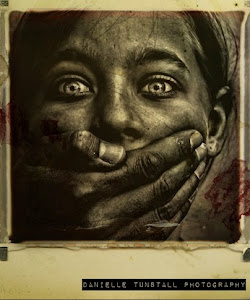
Perhaps it is the state of the world, the economy, the rude and lewd that rears its head and overshadows still those that may be forced to do things that at other times they might not do. I think of robberies of Dairy Marts and stealing toys that this Christmas might inevitably bring.

And so to Chekhov, his brief glimpses into human nature that are so relevant in one way or another to each and every one of us.

Ah yes, human nature; that’s what I will learn about these last days of the year.

Posted in LITERATURE | 1 Comment

LITERATURE: Up Next – A toss-up of fine reading

With Oscar Wao behind me, and Alice Munro's Moons of Jupiter almost finished, I'm considering my next pull from the shelves.

Will it be DeFoe's Moll Flanders, Ibsen's A Doll's House, one of Sinclair Lewis, perhaps Babbit, or Jose Saramago's Blindness.

And as for a short story simultaneous read, likely the Works of Chekhov.

What a lovely luxury, of fingering the books in one's own library to find a selection that suits any mood.

Posted in LITERATURE | 4 Comments

LITERATURE: The Brief Wondrous Life of Oscar Wao – Finale

The story is simple yet complex, involving generations of a family that are doing their best to find love and happiness between lives spent in New Jersey and their homeland of Santo Domingo. But there is no separation, and the countries are only as far apart as a few hours on an airplane; closer even, as the old culture blends into the new.

The story is riddled with metaphors here and there, but the most obvious are the faceless man and the Mongoose; symbols at face value of the fuku–the curse, and Zafa, a protective force of hope.

Junot Diaz has an extraordinary voice in his dual narrators and the inclusion of Spanish words, phrases, and colloquialisms add the emphasis to the drama that the strong characters seem to hold within themselves. Strong-willed, defiant women who make Oscar seem more nerdy than he is hold the reader's attention for the majority of the book. But as with our first image of Oscar's mother through his and his sister Lola's eyes, Oscar changes in his final days and we find the strength of his determination that we saw in the rebellious and passionate natures of the women.

An extremely interesting story of a family as well as an almost too-close-for-comfort intimacy with the evil that reigned in the Dominican Republic through generations.  An excellent read.

As I often do at the end of a reading, I study more about the book and the author if it has held my interest, and have found that Senor Diaz has a website and noticed that he will be speaking at Storrs (UConn) in April of next year.

Posted in LITERATURE | Tagged | Comments Off on LITERATURE: The Brief Wondrous Life of Oscar Wao – Finale

LITERATURE: The BW Life of Oscar Wao – Symbolism

If I had been really good at close reading, I'd have been smart enough to mark those spots that somehow I just knew would form a pattern.

Here, in the closing pages of the story, we're back with Oscar who is in Santo Domingo with his mother visiting his grandmother, and he finally meets another woman with whom he almost has relations with. The problem: her boyfriend is the capitan of policia.

They had guns! He stared out into the night, hoping that maybe there would be some U.S. Marines out for a stroll, but there was only a lone man sitting in his rocking chair out in front of his ruined house and for a moment Oscar could have sworn the dude had no face, but then the killers got back into the car and drove. (p. 298)

"the dude had no face," — this image has been presented by Diaz earlier in the book and decent reader that I am, I remembered about where it occurred and found it easily. Beli, his mother, is facing a very similar dangerous situation:

Dejame, she screamed, and when she looked up she saw that there was one more cop sitting in the car, and when he turned toward her she saw that he didn't have a face.  All the strength fell right out of her. (p. 141)

And I knew it, another one (maybe more but it's no small feat to find a couple words out of so many pages): Abelard's wife Socorro has had bad dreams just prior to his arrest:

Not two days after the atomic bombs scarred Japan forever, Socorro dreamed that the faceless man was standing over her husband's bed, and she could not scream, could not say anything, and then the next night she dreamed that he was standing over her children too. (p. 237)

So the faceless man obviously is not only a leit motif, but a symbol within the magical, superstitious world of this family and this country. But of what?

I would tend toward thinking that it symbolizes man's inhumanity to man. The ever-present danger that lies within each of us to be inhumane and uncaring towards others when our own lives may be at stake. Or, less than our own lives; just the upheaval of them or the fear of losing all that we've come to depend upon.

Just as Diaz keeps the atrocities of the governing regime close in the background of the narrative, the evil within us lies just beneath the surface.

Posted in LITERATURE | Tagged | 4 Comments

LITERATURE: The BW Life of Oscar Wao – Motif & Character

While I might in many ways compare this novel to Marquez's 100 Years of Solitude, Diaz gives his characters a much stronger personality, although Oscar seems to be rather faceless for me when held up against his sister Lola or his mother Beli.

There is a passion to the language Diaz uses here, not particularly eloquent but extremely strong in voice that suits and fills out the two women–perhaps three, considering La Inca, the grandmother as well. These women are, as is common, the survivors, the ones who can overcome anything. They are busty and blustery and a great combination of the strengths and weakness of women who let love drive their lives.

Against the nearly constant background of war, the history of the generations are dealt with in reverse, almost as if Diaz shows us the present  and in explanation, shows us what stock these characters are bred from. There is the motif of war, and the supposed curse on the family, and as well, I find the color black as a fine thread that steadfastly holds them together. While it is their color that often betrays them, it is also seen to me as a line of continuity that helps them rise to face their trials with a spitfire endurance that paler shades could not hold up.

Posted in LITERATURE | Tagged | Comments Off on LITERATURE: The BW Life of Oscar Wao – Motif & Character

POETRY: (UPDATED) Looking for that title, and the last stanza

Aspirations in An Unknown Space

Fishnet-stockinged manatees
dance salsas in their dreams
while laughing dolphins flipper neatly 
through white clouds.

Sharks nest in the highest boughs 
of  weeping pine tree tips 
and lone tuna write their poems in caves  
by candlelight.

The hard earth trembles in the
footsteps of wide-eyed mice 
as an elephant sneaks through whispers 
soft as down.

Man carousels on Saturn's rings
and grabs for golden stars
to hoard in handled baskets wove of
string and time.

Posted in POETRY | Comments Off on POETRY: (UPDATED) Looking for that title, and the last stanza

LITERATURE: Munro’s Mrs. Cross and Mrs. Kidd

This is a very interesting look at two old women who find themselves in a nursing home. Munro carefully draws out the difference in their lives, though they had known each other in kindergarten, over eighty years ago, and likely grew apart and not seen each other much in the interim. Munro displays the difference in their appearance back then, and the husbands they chose, and even the gifts they've received from their children on view in their rooms. Lit-up plastic roses and crocheted dolls that are pincushions are in Mrs. Cross' room; books fill the shelves of Mrs. Kidd's.

While they seek each other out in their new restricted world of wheelchairs and very sick people, there is still within each a tendency to hold onto their own separate lives. When Mrs. Cross befriends a stroke-afflicted newspaper man, Mrs. Kidd sees much less of her, and eventually finds another patient-resident who is more easily manipulated. Mrs. Cross tries very hard to help the man to speak and communicate despite doctors' warnings and when he gets angry with her for her mothering and tutoring ways, she is flustered and weary. Mrs. Kidd notices that Mrs. Cross does not have her wheelchair (here's where I sort of felt Munro contrived the situation, in having Mrs. Cross say that she left it behind in helping the man to the recreation room) and Mrs. Kidd boldly offers her own chair to Mrs. Cross and pushes her all the way back to her room. With instructions to haul herself out of the chair and lay down on her bed and have the nurse return the chair to Mrs. Kidd's room later, Mrs. Cross disappears into her room and Mrs. Kidd, completely exhausted, sinks to the floor to recuperate.

Mrs. Kidd, as soon as Mrs. Cross was out of sight, sank down and sat
with her back against the wall, her legs straight out in front of her
on the cool linoleum. She prayed no nosy person would come along until
she could recover her strength and get started on the trip back. (p. 180)

Again, a beautiful look inside human nature, and yet this last detail spoiled it for me a bit (see previous story review): Why didn't Mrs. Kidd wait until Mrs. Cross had gotten into her bed and then wheel herself back in her chair? While I might understand the show of strength and sacrifice, this little detail seems to undermine the image of both women as quite practical and intelligent. There would have been little lost in having Mrs. Kidd take the chair right then, as Munro has already included the detail of Mrs. Kidd's labored breathing.

I'm beginning to wonder if I'm getting too picky on some things; after all, I accept fiction as it happened that way–not my way. Munro so carefully uses details to define the real story that perhaps I'm just not good enough a reader yet to have understood the image.

Posted in LITERATURE | Tagged | Comments Off on LITERATURE: Munro’s Mrs. Cross and Mrs. Kidd

WRITING: Perspective & Close Reading

Steve Ersinghaus shares an image of what his morning cup of coffee held. It's a delighful picture, yet I see it also as insight into how artists view the world.

Most likely the lights reflected in his coffee are there every morning, waiting for someone to notice and they can only see it if they are standing or sitting at the right angle, where all points intersect to make the image visible to the eye. Merely not looking down negates the possibility.

I might call this "close-seeing," noticing those things that are often discarded by the mind as unnecessary detail. The eyes focus beyond them, seeing the whole picture of a cup of coffee (or a couple of wine bottles) without noticing images that change the story dramatically if one looks from a different angle.

So this is how we may see the world, read the book, know each other, or not.

Posted in WRITING | Comments Off on WRITING: Perspective & Close Reading

LITERATURE: Munro’s Labor Day Dinner – Endings

This story, as do most of Munro's, focuses on how people interact, what part of their inner self they compromise or embellish in order to deal with life and the people in it.  There is usually, as is here, a conflict that unravels slowly through character revelation and interaction, specifically dialogue and reflections, and a resolution that often leaves the character changed only in their acceptance of a situation.

Here, we have a smoldering fight and unhappiness after a year of marriage when realities about one's partner sink in and are often resented. Munro shows us both sides of the situation and we find that they do love each other but that the veneer has worn off. We find the battle one of self-identity and change forced by becoming a partnership. As the ice thaws, one makes the effort to break through and the other accepts, but first considering choices that prepare for future scenarios.

But Munro's ending to this story has just a bit of dissatisfaction to it–not because of the ultimate changes made, the growth in the relationship–but rather the impetus and how it was handled. As they all drive home, and some peace is made, suddenly out of the dark a car comes straight at them, veering off into the cornfields just before they would otherwise impact.  They drive the short distance home and sit in the car in the driveway, likely stunned by the moment that could have ended their lives.

What spoiled it for me? Well I just don't buy that they didn't stop and check on the driver and passenger in the other car. This wouldn't seem realistic, especially since they live out in the country where other cars are not likely to be going by in any number. This sort of changed the image of the two characters that Munro so carefully built.

Posted in LITERATURE | Tagged | 4 Comments

LITERATURE: Munro’s Labor Day Dinner – Revealing a Character’s State of Mind

"And nobody does it better,
makes me feel sad for the rest…"
  (Carly Simon)

Again, Munro's just tops with creating a rounded character that evokes empathy. Here, a husband and wife (Roberta) are going to a friend's for dinner and they've been fighting for a couple days and are in the middle of a polite but cold war. Before they've left, George has told her "Your armpits are flabby," when she asked him why he didn't like what she'd planned to wear.

Munro gives us some of her thoughts:

Flabby armpits–how can you exercise the armits? What is to be done? Now the payment is due, and what for? For vanity Hardly even for that. Just for having those pleasing surfaces once, and letting them speak for you; just for allowing an arrangement of hair and shoulders and breasts to have its effect. You don't stop in time, don't know what to do instead; you lay yourself open to humiliation. So thinks Roberta, with self-pity–what she knows to be self-pity–rising and sloshing around in her like bitter bile.

She must get away, live alone, wear sleeves. (p. 137)

The beauty here is the conflicting emotions. Roberta is well aware that she needn't try so hard to please him, that she needs to learn to be comfortable with herself and her own identity. She "must get away, live alone" she says.  And then adds, "wear sleeves." We know this feeling, we know that she's trapped.

Posted in LITERATURE | Tagged | Comments Off on LITERATURE: Munro’s Labor Day Dinner – Revealing a Character’s State of Mind

LITERATURE: Munro’s Labor Day Dinner – Description

While Alice Munro pins down her characters so well that they remain in the mind for a while as an acquaintance, this definitive description of a 12 year-old caught me by surprise:

Eva is wearing several fragile, yellowed lace curtains draped and bunched up, and held together with pins, ribbons, and nosegays of wild phlox already drooping and scattering. One of the curtains is pinned across her forehead and flows behind her, like a nineteen-twenties bridal veil. She has put her shorts on underneath, in case anyone should glimpse underpants through the veiling. (p. 135)

Now this is typical Munro, describing character via the clothing. We can "see" Eva and get an idea of what sort of girl she is; flamboyant yet proper, a wild-looking outfit yet bridal, see-through yet she thinks to put on shorts beneath.  Munro then goes on to confirm our image:

Eva is puritanical, outrageous–an acrobat, a parodist, an optimist, a disturber. Her face, under the pinned veil, is lewdly painted with green eyeshadow and dark lipstick and rouge and mascara. The violent colors emphasize her childish look of recklessness and valor.

This comes after the detailed descriptions of her parents and older sister. We somehow know that Eva is the character to watch.

Posted in LITERATURE | Tagged | Comments Off on LITERATURE: Munro’s Labor Day Dinner – Description