BLOGGING: Something to think about…

…as I notice that I’ve just passed the 5,000th posting before the five-year anniversary of Spinning in late October. 

How could I have had so much to say?

Maybe it’s time to retreat, to go back to doing instead of writing about what was.  Noticed also that I’ve passed the 600 mark in twittering and that’s just been going on perhaps since February or so.  There are also hundreds of entries on Hypercompendia and those hundreds more on weblogs I’ve since shut down like Morning Stories and Talespinning and the first months of Hypercompendia that I wiped out in a tantrum.

I’ve got to get back into finishing up the setup of a real website that I started back in March.  Or maybe just get back to doing things that give me something to write about someday when I’m old and tired and smiling.  And willing to write about why.

Posted in BLOGGING | 2 Comments

LITERATURE: Ragtime – Credibility of Content

I’m not sure how I feel about this "novel" by E. L. Doctorow. The main thing that bothers me is the inclusion of real characters such as Stanford White, Evelyn Nesbitt, Harry K. Thaw, and Harry Houdini.  While I understand the notion of historical fiction, and of course, the concept that all fiction is based on reality, I somehow feel lied to when real characters are placed into fictional events without definition between reality and fantasy.  I find myself checking the people, checking the facts.  In doing so, I begin to doubt the writer/narrator of the story since he has blurred the line between fact and fiction.

But that’s just me.

Doctorow’s writing style is crisp and clean, using sentence structure to emphasize pace and plot.  With the interaction between the family with whom he opened the story and Houdini, for example, we have an almost hypertextual possibility.  The Mother’s Brother is obsessed with Evelyn Nesbitt, an actress and Floradora girl who is involved with White at a young age, marries Thaw, and is central of the murder of White by Thaw.  This is all historical fact. With the brief encounter of Houdini’s car breaking down in front of the family’s house and thus a direct relationship formed (one which we may believe or doubt), Doctorow then ties Houdini in with Thaw as he waits in jail during his trial. 

My brain starts to itch.

The encounter between the two is an odd one; while Houdini escapes chains and a cell and dresses to leave in one of his escapades, Thaw, surrounded by personal luxury within his cell, proceeds to undress and comes up to the bars facing Houdini in a rather obsence gesture.  No words pass between the two men.  Houdini tells no one. 

So here’s the rub: According to Doctorow, only these two men know the reality or fiction of this small portion of their lives.  When he’s playing with real people however, does he have that right as an author of fiction to bend history?

The answer is likely yes.  But in my mind, it has affected–though not changed–fact. Memory changes history, true, but once things are written down, filmed, proven, can they still be altered? 

Maybe I just need to relax.  After all, my greatest moment of literary discovery was believing Paz’s wave existed as a splash of water that behaved for all intents and purposes, like a jealous girlfriend.

Posted in LITERATURE | Tagged | Comments Off on LITERATURE: Ragtime – Credibility of Content

WRITING & LITERATURE: From the “It was bound to happen” department…

Eric at My Heart’s Porch is an aspiring writer and reader and I drifted over from the feed to his site today to check out a possible link to a book he’s reading titled City of Refuge.  He’s evidently not nuts over it so of course, I went onto Amazon to find out what the novel is about.

I found the following information:

City of Refuge by Valerie Farber and Judith Crown, published by Inkwell Enterprises May 28, 2008

City of Refuge
by Tom Piazza, published by Harper August 19th, 2008

City of Refuge by Kenzo Kitakata, to be published by Vertical Press November 25th, 2008

Rather interesting, no, that with the publishing industry still being inundated with wannabe writers that in the space of almost exactly 6 months, three books come out with the same title?

Of course Harper Collins is the big guy here, one of the largest publishing houses with many rooms.  I found Vertical Press via Google and it appears to be an established translator and publisher of Japanese artists and writers.  Inkwell Enterprises does not come up other than as a business listing in Casselberry, Florida, and does not have a website listed.

I believe that what we’re going to be seeing is an awful lot of repetitive titles once more and more self-published books are made available through dealers such as Amazon.  Self-publishing is not the only reason for this, of course, but it’s more likely that the author in love with his book and willing to self-publish by one method or another is also less likely to bother checking his title or even being willing to give it up if it’s already been taken. What I imagine is the leap from merely title to content and story.

It’s a new world with new problems.

Posted in LITERATURE, WRITING | 1 Comment

WRITING: Group Therapy

We’ve attempted to rekindle an on-campus writing group that survived for about three years before dwindling down to a dedicated two or three.  There seemed to be a call for it; potential new writers who hadn’t been around when the old group was active.  But getting together a bunch of people who are truly dedicated in their need to write and working around schedules is a tough thing to do.

Initially the group forms as the fallout of a creative writing class. While a large portion of the populace "has a novel in them," most don’t have the ambition or time to put in the effort that writing requires and the desire takes a backseat to the demands of career, family, or the allure of other hobbies and interests.  There are some more serious writers who prefer to follow the lonely road of writing and simply may not need the interaction and camaraderie of a group.  The romantic image of Dylan and Shelley and Keats in a cafe discussing craft and social movements doesn’t fit with the modern chaos of life.

There are many successful gatherings of writers and it’d be interesting to study the criteria to understand whether their standing is based on location, social interest, immersion in the field, availability of time, or an inner need to be involved in the craft on a level above and beyond the chair and laptop.

Posted in WRITING | Comments Off on WRITING: Group Therapy

POETRY: Perception

Footfall louder than squirrel;
the hunter listens, waits
the aesthetic anticipates
sun-gold pelt in
hesitant steps
between the script
of leaves.

Posted in POETRY | Comments Off on POETRY: Perception

LITERATURE: Ragtime – Changes

I realize that this is not really first person but third; the reference to Mother and Father, etc. are an unusual way for the narrator to refer to his characters, yet it is reminiscent of the recently read works of Peter Taylor.

We have a father who sells patriotic supplies–everything from flags to fireworks, and he travels quite frequently.  After the episode with Harry Houdini’s car breaking down in front of their house, the father takes off on another business trip via train.  From his seat, he can see the boat full of immigrants coming in to the harbor and imagines the desperate hope the thousands aboard hold inside their fear.

And then this, which should make one think in view of current affairs:

He watched the ship until he could see it no longer.  Yet aboard her were only more customers, for the immigrant population set great store by the American flag.  (p. 15)

Posted in LITERATURE | Tagged | Comments Off on LITERATURE: Ragtime – Changes

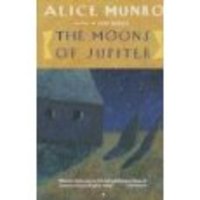
LITERATURE: Up Also: The Moons of Jupiter

082108l
Trying to get more reading done and so I’ve grabbed one of the many Alice Munro anthologies I have on the shelves.

I’ve always loved Munro’s stories, since I first read one in a class many years ago.  Her style is penetrating yet succinct.  Her characters are real and multifaceted.

Should be a fun time.

Posted in LITERATURE | Tagged | Comments Off on LITERATURE: Up Also: The Moons of Jupiter

LITERATURE: Ragtime – First Impressions

Just got through the first short chapter and I do like the writing style.  Doctorow has grounded the novel in a setting of New Rochelle, NY in the early 1900’s, his narrator a young boy living in a typical neighborhood of middle class families.

And how could you not like a book that starts chapter 2 with:

As it happened Houdini’s unexpected visit had interrupted Mother and Father’s coitus. (p. 13)

Posted in LITERATURE | Tagged | Comments Off on LITERATURE: Ragtime – First Impressions

LITERATURE: The Old Forest – Finale

It’s been quite an experience reading this anthology.  I’ve learned so much in watching Peter Taylor skillfully focus and bring out the innermost personality of his characters while weaving a setting that grounds the players together in an American South that is still reacting to the supposed liberation brought by the Civil War.  Yet there is still a war of sorts going on as society attempts to adjust to not only racial but gender bias that is just beneath the surface.

I’ve already written much about Taylor’s use of narrator, trustworthy or unreliable though he/she may be, and his intense work in allowing the reader to form opinions about the narrator and what is going on.  The stories aren’t usually featuring a major event that changes lives, but rather a normal situation that brings out the deeper feelings of the characters.

I’m ordering Taylor’s A Summons to Memphis, to see how he handles a longer narrative. I’m also planning on reading more of Taylor’s short stories and see what else I can hope to learn.   

Posted in LITERATURE | Tagged | Comments Off on LITERATURE: The Old Forest – Finale

LITERATURE: The Old ForestThe Scoutmaster

This story perhaps more than any other illustrates Taylor’s method of characterization through character observation.  There is, as a matter of fact, very much "overhearing" thus giving us what may (if we assume narrator reliability, and that’s been a major factor with Taylor’s stories–to the good) be fact and how the narrator reacts to the event.

The story here is rather simple, though I think I’ve picked up something else on Taylor in that the protagonist is not always clearly selected at the beginning of the story.  Noticing the title, the Scoutmaster, we find fairly early on that Uncle Jake is the scoutmaster referenced.  Yet in the story, while he plays a major character, Virginia Ann appears to be the focus.  What I’m coming to believe is that Virginia is merely the "event" that brings everyone else’s characterizations more into definition as they react to her actions.

Uncle Jake then, steps up to plate as protagonist.  He is the mediator between the generation of the parents and their children.  We get his own background via conversations between Mother and Father, but we see into his soul via the child (nephew) narrator. 

Taylor does some truly amazing stuff with the simplest of story.  But it is the simple story of human nature with which we all can best relate.

Posted in LITERATURE | Tagged | Comments Off on LITERATURE: The Old ForestThe Scoutmaster

WRITING: More on Verse

In setting out a short story into verse, I’m finding obvious places where the story doesn’t suit the form.  Interestingly enough, I noticed–but ignored–this in the story form as a change in voice, where the imagery and beat or rhythm of the phrasing seemed a bit off.  What it came off as and what I suspected at the time that I had changed into a ‘telling’ segment of backstory that while in place within the plot, became an obvious change in tone with the pace of the present. There are parts that become downright awkward and halting, as I find it difficult to break into lines within a stanza (determined by former paragraphs).

What I’m doing is, despite the difference, going ahead and breaking it into lines regardless.  What I believe this may do is help highlight the sections that don’t work within the poetic form and revise them to flow smoothly in with the rest.  While I may choose not to retain the verse form, it should, even reconstructed into prose, make for a better narrative flow.

Posted in LITERATURE | 4 Comments

LITERATURE: The Old Forest – More on Taylor

The majority of Taylor’s stories in this anthology are set in the old South of Tennessee and therefore there is the constant of social status as well as the racial relations.  Taylor’s amazing insight coupled with his skill at exposing his characters brings a tremendously powerful impact on what is usually a fairly simple story line of interaction.

For example, in Porte Cochere, we are in the study of an elderly man who listens in on his grown children who are visiting for his birthday.  Here Taylor uses a standard he’s established of the protagonist revealing a personal opinion, one less than of high regard, of his offspring and we are into a battle of changing values brought with each generation.  What Taylor does give the reader in Porte Cochere however, is the reason for the man’s rancor.  In this case, his having been beaten by his father as a boy and his resolve to never be a father.  What happens here is more reinforcement of the character, as well as giving us a bit of background of which his own children are unaware, and which explains much of their opinion of him as well.

Some good lessons in character development to be learned here.

One of Taylor’s stories, Rain in The Heart, is particularly subtle and I realize that I need to go back and reread it in order to fully enjoy and get out of it what Taylor has so aptly put in.

Posted in LITERATURE | Tagged | Comments Off on LITERATURE: The Old Forest – More on Taylor

WRITING: Verse

Interesting; it struck me that a recent short story was, when read aloud, rather lyrical in sound so I started chopping it up into lines and it works–but it doesn’t fit any proper form.  The best I could call it is a free-form ode.

Fun to fiddle with it though. And, I suppose if I think it could work better as poetry, I could adjust it to fit a structure of sorts. Or, leave it as is and let the reader discover it for himself.

Posted in WRITING | 2 Comments

LITERATURE: The Old Forest – Taylor Magic

I’ve been trying to put my finger on how Peter Taylor manages the deep character revelation he does while in such a subtle way, particularly by using the narrator voice to establish something often quite different than what the narrator says, or sometimes just in the way the narrator relates the story.

It’s been difficult to post examples because for one thing, Taylor builds a character very gradually and then further reading reinforces the point he is making.  Therefore, taking something out of context is sort of useless without dragging a good percentage of the story into the statement.  Going back is next to impossible to find the place where something is hinted at because again, the subtlety is easily missed.  But here’s one that kind of represents what I’m seeing.  This is from The Scoutmaster:

I used to hear Uncle Jake asking Father very gently why he was so "hard on" Virginia Ann and asking if he didn’t know that all "modern girls" were like that.  And I would sit and wonder why he was so hard on her.  (p. 267)

Now here’s a narrator who I’m guessing is a sibling of Virginia Ann who has spent the first few paragraphs of story telling the reader that a) Virginia Ann often uses trendy sentences that are in fashion at the time and b) Father and Mother are unable to "abide" this overuse.

But what we’re getting is so much more: Uncle Jake’s opinon, as well as his careful handling of the topic with his brother about his niece, and something even more important about the narrator, that he sides with Uncle Jake.  Taylor doesn’t say that, but it is implied by the straightforward "And I would sit and wonder, etc."   

Two more things: Everything is being "overheard," and Uncle Jake’s direct dialogue lays out the scenario more than Father confronting Virginia Ann–that means something right there about the parent/child relationship.  And this, that Father (and Mother) repeat phrases themselves, i.e., the word "abide" which is more obvious in the next paragraph:

Yet Mother’s groans were as loud as Father’s when they heard Virginia Ann greeting her date at the front door with "Well, well, well, if it isn’t my country cousin!"  I would turn my eyes to her and Father as soon as I heard Virginia Ann say this, for I knew it was one of the things they could not abide. 

Aunt Grace lives there too; a sister of Mother’s who has divorced her husband.  Grace also sticks up for Virginia Ann, but it is more obvious than her accusations might have us believe, that Mother and Father are proudest of their daughter and perhaps make these negative comments for the very purpose of being proven wrong and hearing praise as they themselves may be either too humble to offer, or too greedy for compliments on their skills as parents.

It’s all twisted in there, and Taylor makes us listen to his characters very carefully to glean the real story.

Posted in LITERATURE | Tagged | Comments Off on LITERATURE: The Old Forest – Taylor Magic

WRITING: Voice

One of writing’s toughest elements for me to grasp is the concept of voice.  It’s been a mountain to climb to develop it, particularly when I didn’t quite understand what it was and how it affected story.  It’s not all that easy to pin down–unless you read a story that shouts of it. 

What I’ve come to discover about voice is that its primary attribute is honesty.  Sadly, I see that the best of my writing has been when the voice is given its force from the depths of memory of my own living.  Enhanced, of course, and often as not, played down a bit to mask the sometimes-too-real emotion or event that acts as base.

So, while all is fiction, all fiction has a grounding in reality.  What can and should be gleaned from recall is the feeling, the reaction, the caring or change that came out of an event.  Then, the event can be recreated into something else of similar import if not occurrence, and the voice is what will carry the story.

Posted in WRITING | Comments Off on WRITING: Voice