REALITY?: Et al

I have to write a short story, place some press releases, plaster a town with meeting notices, write up a dignified brief bio (cramming sixty years of achievement into a three sentence of most stellar successes), reread two essays, clean up and send out a hypertext workshop presentation, and rewrite a hypertext piece.

Most deadlines due within hours, a day or two at most.

Posted in REALITY | 2 Comments

CLASS NOTES: 4/9/08

Rather a dismal opening to the class last night with confessions that will hopefully turn into good news for all eventually.  It seems the smaller the group, the more intimate and the more willing we are to relate, admit, open ourselves to others.

Working over Raymond Carver’s phenomenal Cathedral and learned so much more than even all my close reading dug out of it.  Focused on the intricacies of Carver’s skill with first person pov, a much more difficult story to pull off than the third person.  Carver is a master at not saying what he says, at showing through language the more accurate thoughts of his narrator than what he’s recounting. 

One of the important points is the necessity of all story being in past tense–related to us after it has happened.  The change in voice and character relating an experience after the experience has happened.

Carver’s story is clearly character-based and the techniques he uses to explore those characters force the reader to form an opinion based on how the story is told rather than what is being said.  Need to practice this–particularly with my own tendency to overexplain.

Posted in Uncategorized | Comments Off on CLASS NOTES: 4/9/08

REALITY?: Happy Signs!

Saw three bluebirds this morning!  A nesting pair that are checking out the bluebird box.  Unfortunately, I think it needs repair or replacement because last year we had them but they abandoned the nest and we’ve forgotten to fix whatever was wrong with it.

Spring always comes suddenly.  I have to put out the hummingbird feeder before they come to remind me they’re here and hungry.

Posted in REALITY | Comments Off on REALITY?: Happy Signs!

WRITING: Confession

You’ve got to understand, those were hard times.  So yes, I did kill my husband, but there was a reason why it happened as it did.

Posted in WRITING | Comments Off on WRITING: Confession

REVIEWS: Cathedral – Finale

I’m afraid I’ve gotten caught up in close-reading this story as a literary critique rather than focusing mainly on the aspect as a lesson in writing so I thought I’d end this series with that alone.

Written in first person point of view, we find a narrator who I would consider as semi-reliable.  He appears to be telling his honest reactions and yet at the beginning we feel he is holding back, glossing over.  We tell more about his character by gauging his sentence structure and language use. 

The focus of this story is change in character–there’s no question about the fact that he does.  The story is about a man with prejudice, jealousy, self-pity, feelings of exclusion, and this switches to a man whose world opens up to him by the very man (Robert) who he is guarding himself against.

The plot is step by step with backstory given as a basis of his perceptions–even though we do not learn much about the narrator’s past, we learn about him through his telling of his wife’s past along with Robert’s. 

There are plot points of conflict in the upcoming visit, the visit itself which includes several minor battles of control–the conversation with his wife, the recalled tapes, the car in the driveway and his wife laughing, the seating arrangement, the drinks, the meal, the smoking of marijuana, the TV program, the breaking down of borders until the two men are seated next to each other on the floor, drawing at the coffee table.  The movement of the characters mimics the movement of mental change, where they draw (no pun intended) closer together.

Themes include building (cathedrals/relationships), the manner of being unnamed, the seeing versus unseeing (who is blind, after all?), prejudice and understanding. I would add borders to this list, and space as each character finds himself within and is willing to breach.

Carver’s use of language is sublime.  The sentence structure gives us a good idea of the narrator’s style of thinking.  There is the conflict between the two men that the narrator reveals in a round-about manner, but despite his graciousness to his guest, Robert picks up on it and reaches out to him to try to overcome it.  Carver selects his details very carefully in making just about every word move the narrative towards its ultimate outcome.

I’d also mentioned the metafiction; in the difficulty the narrator has in explaining the cathedral with words.

That’s it.  I’m tired of it now.

Posted in REVIEWS | Comments Off on REVIEWS: Cathedral – Finale

REALITY?: Opening the Door for Big Brother

If government at the local level can enact laws that tell us what we can and cannot eat, whilst overlooking alcohol and tobacco (heavily taxed), what other rights is it seeking to recover from us, and why are we so willing to give them up?

Stamford’s governing board has approved a ban on trans fats at city restaurants.      Trans fats are shortening and hydrogenated vegetable oils linked to "bad cholesterol" by the Food and Drug Administration.
The Board of Representatives has voted 22-12 to ban trans fats as of
July 1 in food service establishments. However, items in the
manufacturers’ packaging, such as cookies or chips, are exempt.
Manufacturers create trans fat by adding hydrogen to oil. This
hydrogenated oil has a longer shelf life and more stable flavor.      The city’s health director said inspectors will incorporate the new anti-trans fat rule into their routine inspections.

Posted in REALITY | 2 Comments

REVIEWS: Cathedral – The Change in Character

This final scenario, that of the narrator allowing Robert to lead him in drawing an image of the cathedral signals a dawning realization upon the narrator to open up to experience and allow learning and understanding beyond his own self.

It starts again with movement–the physical boundaries of the two as they sit side by side on the carper.  Borders are being traversed, the physical distance along with the mental distance between then.  More on borders:

He ran his fingers over the paper.  He went up and down the sides of the paper.  The edges, even the edges.  He fingered the corners.
"All right," he said.  "All right, let’s do her."

Robert is outlining the space for their meeting.  When he says, "(…)let’s do her." I find a reference to his fingering of the narrator’s wife’s face long ago. 

Robert seems to understand the narrator’s feelings and seems to want to bridge the gap between them, help him to see beyond his world.  The cathedral is a tool Carver uses as a metaphor perhaps for the building of that relationship, setting a metaphorical base.  Robert’s encouraging, "Doing fine," and "It’s all right," evidence his knowledge of the narrator’s need to overcome his own mental barriers. 

At one point, the wife wakes up and asks what they’re doing.  The narrator appears to not be willing to share this with her as he doesn’t reply. Robert answers her simply, but he seems to see the breakthrough moment coming and does not want to jeopardize that. 

I did it.  I closed them just like he said.
"Are they closed?" he said.  "Don’t fudge."
"They’re closed," I said.
"Keep them that way," he said.  He said, "Don’t stop now. Draw."

The narrator is in the middle of a life-changing moment:

So we kept on with it. His fingers rode my fingers as my hand went over the paper.  It was like nothing else in my life up to now.

But even as Robert tells him to "Take a look," the narrator keeps his eyes closed.  He tells us, "I thought it was something I ought to do."  Though we can’t be sure that the narrator is being honest with us, is telling us his real feelings and thoughts as he tells this story, I take this statement not as being something he would do for Robert’s sake, but for his own as he holds onto the moment of revelation. 

Aside from his newly formed understanding and acceptance of Robert (and blindness), he may also be experiencing a new outlook on his own life.  He feels a freedom that he verbalizes as:

My eyes were still closed.  I was in my house.  I knew that.  But I didn’t feel like I was inside anything.

His reply to Robert’s questioning about the drawing do not refer to the drawing but to his own sense of outlook:  "It’s really something," I said.

Posted in REVIEWS | Comments Off on REVIEWS: Cathedral – The Change in Character

REVIEWS: Cathedral – Character Revelation

It seems I can’t read through two pages–or often just a single one–without finding something…

The narrator finds himself woefully unable to describe the cathedral to Robert.  In his attempts, he brings in religion:

"They’re really big," I said.  They’re massive. They’re built of stone.  Marble, too, sometimes.  In those olden days, when they guilt cathedrals, men wanted to be close to God.  God was an important part of everyone’s life.  You could tell this from their cathedral-building."

This is Carver’s method of bringing in something to learn about the narrator via cathedral to religion to reality. This opens the dialogue between the two men in new areas of awareness.  Robert asks about the narrator’s beliefs.  And here’s what Carver has the narrator admit of his own self-awareness:

I shook my head.  He couldn’t see that, though.  A wink is the same as a nod to a blind man. "I guess I don’t believe in it.  In anything.  Sometimes it’s hard.  You know what I’m saying?"
"Sure, I do", he said.
"Right," I said.

Carver has left us some information here.  The narrator is questioning belief in spiritual matters, perhaps in life purpose as well.  Maybe this is why he sits up nights smoking dope.  Robert’s reply can mean anything, can be a comment on the humanness that we all share, or it can simply be a gracious guest’s reply.  The narrator takes it (it seems) as Robert’s state of living with blindness.

Carver also skillfully reminds us that someone else is in the room, actually between the two speakers:

The Englishman was still holding forth.  My wife sighed in her sleep.  She drew a long breath and went on with her sleeping.

With those three sentences, Carver reestablishes setting: the three are on the couch, the wife is asleep, the TV is still on.  He can then continue with the focus of the story.

There’s one more thing here that catches my mind:

It was then that the blind man cleared his throat.  He brought something up.  He took a handkerchief from his back pocket.

While it may mean nothing at all, Carver is too adept at giving us just what we need to not consider the possibility that Robert is ill, perhaps this is another reason for his visit.

Posted in REVIEWS | Comments Off on REVIEWS: Cathedral – Character Revelation

REVIEWS: Cathedral – Transitioning & Props

Been wondering why the title of the story is Cathedral?  Well we’re about to find out.

With Robert and the narrator mellowed by food, drink, and pot and  "listening" to the TV, we are given the setting up of the basis of change in character.  Might I say at this point that I’m not as happy with the titling since when the cathedral shows up on page nine, it seems almost contrived to suit the purpose, wherein it truly is not as whatever was on TV might have inspired the narrator’s desire to share and his curiosity of how the blind man imagines things. This is a transitioning point; the narrator is willing to ask Robert about his blindness, to explore the nature of it.  He is also moved by what he is seeing and wants to tell Robert about it.  The prop is the image of the cathedrals.

There are several points of interest here.  As the narrator attempts to explain a Spanish festival, we get from Robert in reply:

"Skeletons," he said.  "I know about skeletons," he said, and he nodded."

I would take this to mean that through his fingers–and this goes back to the narrator’s recollection of his wife’s telling him about Robert touching her face–Robert learns how people "look."  There is that reference to structure as a means of imaging that will tie in with the architecture of the cathedrals.   Carver has also set this statement aside in a separate paragraph; which is the normal way to display the dialogue, and yet, leaving it unanswered seems to be a writer’s technique to keep it meaningful.

We learn that the blind man’s mental image depends upon how something is described to him.  When he answers the narrator’s question of "Do you have any idea what a cathedral is? What they look like, that is?"
(which is likely a question that the alcohol and pot has loosened him into allowing him to ask), Robert gives back just what he has heard on the TV.   What this brings to my mind is the recent exercise in class of describing the hallway and the writer’s attempts to produce and the difficulty in producing imagery not by measurement alone.

I stared hard at the shot of the cathedral on the TV.  How could I even begin to describe it?  But say my life depended on it.  Say my life was being threatened by an insane guy who said I had to do it or else.

Not life, but assessment of learning; not guy, but Professor of English.  We’ll leave the insane there for now…

Posted in REVIEWS | Comments Off on REVIEWS: Cathedral – Transitioning & Props

REVIEWS: Cathedral – Turning Point

Some notes first.  Robert takes to calling the narrator "bub" which is common, but also could be a power play.  In any event, names (labels?) are an important theme in this story.

When the wife comes back down, she smokes a joint with the two men, sitting between them on the couch.  If we see them first on separate sides of a table during a meal, then Robert and the woman on the couch with the narrator on a chair–we might assume it is facing them or at least in the general direction, we note that they are now all together on the couch.  There’s movement toward each other here.  Perhaps even the relationship of the narrator and his wife is reflected in this physical positioning (aside from the obvious need to be within arm’s reach of each other).

"No, I’ll stay up with you, bub.  If that’s all right.  I’ll stay up until you’re ready to turn in. We haven’t had a chance to talk.  Know what I mean? I feel like me and her monopolized the evening."  He lifted his beard and he let it fall.  He picked up his cigarettes and his lighter.
"That’s all right," I said.  Then I said, "I’m glad for the company."
And I guess I was.  Every night I smoked dope and stayed up as long as I could before I fell asleep.  My wife and I hardly ever went to bed at the same time.

There’s an interesting shift in po
sitioning here.  And just prior to the above, with the wife asleep, a more interesting one:

Her head lay across the back of the sofa, her mouth open.  She’d turned so that the robe had slipped away from her legs, exposing a juicy thigh.  I reached to draw her robe back over her, and it was then that I glanced at the blind man.  What the hell! I flipped the robe open again.
"You say when you want some strawberry pie" I said.

He realizes that the other man cannot enjoy the sight of his wife’s "juicy thigh" and is likely reassured of his home base which this other man has ‘invaded’ physically as opposed to his prior claim to her past and via tape recordings since.  The narrator, feeling secure, and reinforcing his territorial borders, offers Robert "some strawberry pie."  A metaphor, surely…

Several times during the evening, Robert "lifted his beard."  I’m not sure of the significance here, but the narrator’s amazement that he should have a beard clearly points to a symbol of sorts–intelligence? maturity?  generosity (Santa Claus?)

Despite my belief that the story was all told in the first two paragraphs, these details fill out the narrative by giving us some basis of understanding of background, rounding of characters, as well as a  slower, more gentle build towards a conclusion  which appear to indicate a gradual acceptance of Robert as well as himself by the narrator.

Posted in REVIEWS | Comments Off on REVIEWS: Cathedral – Turning Point

REVIEWS: Cathedral – Interaction

I know, I said that these pages weren’t necessary to story…but they’re so good that they do indeed add to it.

The narrator assumes his duties as host, offering Robert a drink.  Here they attempt a tentative social bonding over drinks and a full meal, the narrator even being on the edge of admiration. 

There’s a subtlety to where they sit when they retire to the living room: his wife and Robert on the couch, the narrator in "the big chair," thus establishing some sort of status.  Our narrator is either mellowed by food and drink, or he is starting to like Robert a bit, though sly remarks still creep in:

We had us two or three more drinks while they talked about the major things that had come to pass for them in the past ten years.  For the most part, I just listened. Now and then I joined in.  I didn’t want him to think I’d left the room, and I didn’t want her to think I was feeling left out. 

He is making an attempt at being social, may even have begun to enjoy Robert’s company, but he needs to reinforce two things: one, that Robert is blind and two, that he cannot let her know how he’s feeling.

They talked of things that had happened to them–to them!–these past ten years.  I waited in vain to hear my name on my wife’s sweet lips: "And then my dear husband came into my life"–something like that.

Again here we have the mention of "name" — leit motif?

It seems that as they talk more and more about Robert’s adventures, the fragile bond disintegrates as the narrator answers Robert’s questions about himself with obvious lack of enthusiasm.  There was a very important battle here as if for mating rights, and the victor to the narrator’s mind, was clearly Robert.

The wife grows sleepy and and intends to change into her bathrobe.  Would it have mattered if Robert were not blind?  To her?  To the narrator?

He is getting a bit uncomfortable sitting alone with Robert "listening" to the TV.  Interesting how he has changed his manner of speaking here to accommodate Robert’s blindness; he would most likely have naturally have said, "he and I watched…" and then maybe corrected himself.

Another bonding medium: pot.  Here I’m wondering if the narrator is again raising a challenge to Robert.  It is something he and his wife share, and if Robert passes on the joint, it will be one point less; if he goes for it, then it is something the two will share, maybe all three.

It does something else: It brings them both sitting together on the couch.

Posted in REVIEWS | Comments Off on REVIEWS: Cathedral – Interaction

REVIEWS: Cathedral – Nuances of Conversation

Cripes–I’m only on page 3–and there’s so much to go into that I’m going to have to drop some of the lesser points.

The visit begins with tension:

So when the time rolled around, my wife went to the depot to pick him up.  With nothing to do but wait–sure, I blamed him for that–I was having a drink and watching the TV when I heard the car pull into the drive.  I got up from the sofa with my drink and went to the window to have a look.

The obvious question: if he had nothing to do but wait, why didn’t he go with her?  He watches closely his wife’s movements as she gets out of the care:  "She was still wearing a smile. Just amazing."  From a prior conversation between the two I get the sense that she is down-to-earth, honest and caring.  She is trying her best to include her husband in her relationship with Robert–at least to the point of sharing her experiences, but he really prefers to stand back and sulk:  "This blind man, feature this, he was wearing a full beard!  A beard on a blind man!  Too much, I say."  This is a hoot.

I note something interesting here:

My wife said, I want you to meet Robert.  Robert, this is my husband.  I’ve told you all about him". 

She doesn’t introduce her husband by his name–

Then comes a time of one-upsmanship:

"I feel like we’ve already met," he boomed.
"Likewise," I said.  I didn’t know what else to say.  Then I said, "Welcome.  I’ve heard a lot about you."

This wording specifically shows that the narrator wants to let Robert know that he knows all about what’s going on; he’s not in the dark or on the outside of this.  His other option would have been something to put the man ill at ease, to claim his superior position as her husband such as letting him think he was unimportant to her and not discussed at all.

Another subtle indication of his reluctance to show his feelings except via oblivious sarcasm: 

My wife finally took her eyes off the blind man and looked at me.  I had the feeling she didn’t like what she saw.  I shrugged.

Interestingly, he proceeds to describe Robert’s appearance, noting that he had "never met, or personally known, anyone who was blind."  What I think the narrator was more interested in was measuring the man as a potential rival for his wife’s affections.

While the narrator does purposely allow some slips to come through ("Which side of the train did you sit on, by the way?") he does attempt to behave as a proper host.

Posted in REVIEWS | Comments Off on REVIEWS: Cathedral – Nuances of Conversation

REVIEWS: Cathedral – Character Prejudice & Empathy

Even as I believe the basic character flaw–and that which is to be overcome to form story–is not so much bias against the blind man but rather the narrator’s feelings of exclusion from a portion of his wife’s life (and here there’s so much more to question: does she give him reason to feel this way [I would say, no]?)–there is another personality trait here of bias that may work in conjunction with his feelings of isolation. 

In a dialogue between the narrator and his wife about Robert’s forthcoming visit, we get some sense of the interaction of the marriage (remember, he didn’t want to tell her he didn’t like poetry), and we get a taste of racial bias:

I didn’t answer.  She’d told me a little about the blind man’s wife.  Her name was Beulah.  Beulah!  That’s a name for a colored woman.

"Was his wife a Negro?" I asked?

The funny part is is that this is the first instance where the narrator has told us a character’s name.  There is something here.  Perhaps because he feels she has not taken a part of his wife from him.  Perhaps he feels an empathy because she too was, just like him, an outsider to the relationship between the blind man and the narrator’s wife. 

There is a softening here towards Robert–though only for a millisecond before he switches it over to Beulah.  And this is one of my favorite lines:

They’d married, lived and worked together, slept together, had sex, sure–and then the blind man had to bury her.   All this without his having ever seen what the goddamned woman looked like.

What’s the narrator telling us about his view of this marriage between Robert and Beulah?  What is it telling the reader about his own?

Posted in REVIEWS | Comments Off on REVIEWS: Cathedral – Character Prejudice & Empathy

REVIEWS: Cathedral Reinforcement

As I said, I could likely have gone from those two first paragraphs to a conclusion, and the thought of a dozen pages in between seems extraneous, but there is a subtlety about Carver’s story that make the reinforcing of characters enjoyable reading.  We also get a chance to form our own opinion of the narrator’s wife.

We get a good idea of their relationship from the narrator’s recall of her wanting to shop him a poem she wrote about her feelings when Robert touched her face:

I can remember I didn’t think much of the poem.  Of course, I didn’t tell her that.  Maybe I just don’t understand poetry.

Clearly he keeps his feelings to himself, even as she is will to share her relationship with Robert with him.   Perhaps she even understands that she must prove to him that it is innocent, or that it’s not something she for any reason is keeping to herself.  I like the softening effect of the last sentence–in case his rancor came through too strongly.

When he describes her first marriage, there is sarcasm and separation: "this man who’d first enjoyed her favors, this officer-to-be…"  Even the fact of her unhappiness in her first marriage doesn’t lessen his resentment:

But instead of dying she got sick.  She threw up.  Her officer–why should he have a name? he was the childhood sweetheart, and what more does he want?–came home from somewhere, found her, and called the ambulance. 

And so too, Robert does not have a name, nor does "his wife."  Interesting as well is the present tense use of "what more does he want?’  that reveals that at least in the narrator’s mind, the first husband is very much a presence and a threatening one.

Posted in REVIEWS | Comments Off on REVIEWS: Cathedral Reinforcement

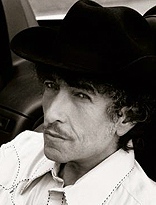
PEOPLE & REALITY?: Dylan Wins Prize

Dylan Wins Prize:

Congats to 2008 Pulitzer Prizer winner Bob Dylan:  Special Citation.

A Special Citation to Bob Dylan for his profound impact on popular music and American culture, marked by lyrical compositions of extraordinary poetic power.

040808peo

Other 2008 winners are listed here.

(Via The J-Walk Blog.)

Posted in People, REALITY | 3 Comments