
WRITING & LITERATURE: Mumblings

Even as I fill the day with e-mail discussion about the ego, fears, methods and means of writing there are more discussions daily regarding both the reading and the writing of story.

At Chekov’s Mistress there is a post and links to more questioning of the the short story formm and Bud Parr’s simple logic:

"Keep writing, reach back to your classics for inspiration and rely on yourself to push the form. That’s the short of it."

More at Bud’s there is this gem from Borges:

"Nobody thought in terms of failure or success in selling books. We thought of writing as, I would say as a pastime, or as a kind of destiny."

And from Bud again, a post on the different levels of reading:

"There are so many levels of experience to be had by a great book that getting at some meaning as perceived by critics or academics or ticking off known references in your head doesn’t have to be a part of your interpretation."

It seems to me that Bud’s new set of twin boys in the family has either inspired more postings, or finds him up at all hours and I suspect that he’s learned to type with one hand while the other clasps a wide-awake infant to his chest.

Posted in LITERATURE, WRITING | 1 Comment

NEW MEDIA & LITERATURE: Methods of Story

if:book always has some interesting points on what both artists and audience are reaching toward in story.  This is a particularly fine post regarding changing methods of reading, therefore, filling the demand with adjustments to writing styles and means.

"The boundaries between page and screen, inside and outside, imagination and reality are shifting around us. We are fumbling towards new ways to make and publish fictions online. Interaction needs to be more than the multiple choice options for what’s next. Readers want to inhabit a good book, not be pressured into helping to write it."

This gives the would-be writer much to think about.  As I stand in the dark morning kitchen of James Agee’s Jay and Mary as they say goodbye (A Death in the Family), I feel the familiarity and yet the tension between them that’s hidden in learned marital politeness. Is this something I want to change or is it something I want to explore.  In hypertext, a story such as Steve Ersinghaus’ The Life of Geronimo Sandoval, there are other possibilities–not options, but possibilities.  In Agee’s novel then, it wouldn’t be of my doing, but I might see a character such as Jay, instead of kissing Mary goodbye and getting into his car, instead pull off his tie, unbutton his shirt, grab Mary by the wrist and take her back upstairs.

The post at if:book also questions the necessity of story arc and conclusion:

(…)has grown out of observation of how children actually play; they don’t enact complete adventures but drop in and out of narrative threads – walk along a wall and you’re escaping across a chasm; clamber up a tree and you’re creeping up on an enemy; enter an enclosed space and it becomes a homestead where imaginary meals are cooked and served.

My initial thought is that adults have learned to organize their thought process and this is essential to survival.  But why can’t the child in us be retained for some areas of our lives–such as reading, as the posting suggests?

So then, Jay leaves, has second thoughts and returns home to find that Mary, his kids, the house are all missing and a Wal-mart stands in place.  In the space of an instant of thought, his world of the past is no longer there.

Posted in LITERATURE, NEW MEDIA | Comments Off on NEW MEDIA & LITERATURE: Methods of Story

LITERATURE: A Death in the Family – Laying the Framework

Agee appears to reveal his story slowly, lovingly using each word to fit within and enhance his characters and their relationship to each other. There’s a whole chapter that covers an evening that has six year-old Rufus going to see a Charlie Chaplin movie with his father, Jay, and the long walk home.

(…)Rufus felt his father’s hand settle, without groping or clumsiness, on the top of his bare head; it took his forehead and smoothed it, and pushed the hair backward from his forehead, and held the back of his head while Rufus pressed his head backward against the firm hand, and, in reply to that pressure, clasped over his right ear and cheek, over the whole side of the head, and drew Rufus’ head quietly and strongly against the sharp cloth that covered his father’s body, through which Rufus could feel the breathing ribs;  (p. 24)

The two speak little, yet through gesture and proximity, we see that the boy adores his father, the father loves his son.  Later that night, the father is awakened by a phone call that brings news of his own father being ill.

He sighed, and thought of his father as he could first remember him: beak-nosed, handsome, with a great, proud scowl of black mustache.  He had known from away back that his father was sort of useless without ever meaning to be; the amount of burden he left to Jay’s mother used to drive him to fury, even when he was a boy.  And yet he couldn’t get around it: he was so naturally gay and so deeply kind-hearted that you couldn’t help loving him.  (p. 30)

There’s a chain of generations established here, but it’s more. It is a clear-sided box of layers of time that are all seen simultaneously, bonded together by the relationship of father and son, father and son.

Posted in LITERATURE | Tagged | 2 Comments

LITERATURE: A Death in the Family

Just started on this today but it’s amazing how quickly I’m learning to switch worlds.  From the unknown and odd Flatland, or Sandoval’s alluring parallelism, I’m back to a post-war America where family is stable–no mother would dream of leaving her child in the woods here. 

Realizing that this novel by James Agee was published posthumously and also awarded the Pulitzer Prize, I’m caught up in the language that brings me back to the world of poetics.  The prologue, full of imagery, is long but sets the tone of the times and the story.

But the men by now, one by one, have silenced their hoses and drained and coiled them.  Now only two, and now only one, is left, and you see only ghostlike shirt with the sleeve garters, and sober mystery of his mild face like the lifted face of large cattle enquiring of your presence in a pitchdark pool of meadow; and now he too is gone; and it has become that time of evening when people sit on their porches, rocking gently and talking gently and watching the street and the standing up into their sphere of possession of the trees, of birds hung havens, hangars.  People go by; things go by.  (p. 13)

Agee creates a world of mothers, fathers, children, all placed within a safe neighborhood of well kept houses and hearty meals made by aproned women in sparkling clean kitchens.  It is inviting to the reader and one where we dredge up our own memories to relate.  Oddly, though I remember our large kitchen in the apartment upstairs in my grandfather’s house, and the red tiles on the floor, the rocker in the corner where my dad read us Golden Book stories while we laid our head on his chest; I don’t remember the table.

Posted in LITERATURE | Tagged | 2 Comments

WRITING: The Muses of Hell

You can have time and patience and words and yet nothing will unravel into story.  You can make up your mind that you have no words and don’t have the least knowledge of arranging them nor ever will.  You can click away years of labor as unsalvageable trash knowing that nothing you write will ever be better.

And it’s then that the devils dance in your mind hissing their tales of pain and complaint and intriguing with wonderful horrible stories of where they have been and you, they will warn, are standing on edge and just about ready to fall.

Posted in WRITING | Comments Off on WRITING: The Muses of Hell

PEOPLE: Congratulations!

101907p

108 and blogging away–best wishes to Olive at her blog Life of Riley!

Posted in People | Comments Off on PEOPLE: Congratulations!

LITERATURE: Up Next – A Death In the Family

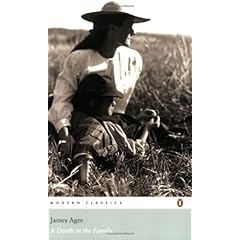
Death in the FamilyI just pulled it out to make room for putting back Flatland, but this novel by James Agee certainly appeals as a down-to-earth, exciting reality story, judging by the back cover:

"There’s nothing quite like the excitement of coming upon a book and suddenly having it explode at you and fill you with wonder.  Such a book is A Death in the Family." — Saturday Review

I’m afraid I’m burying myself in reading lately, avoiding issues that need be faced and dealt with eventually. 

But then, there’s a couple of hundred books on the shelves that need to be read.

Posted in LITERATURE | Tagged | Comments Off on LITERATURE: Up Next – A Death In the Family

LITERATURE: Flatland – Finale

Tremendously interesting book, despite the fact that it likely could have been read much faster and I sort of dragged it out a bit.

What I appreciated was the concept of presenting the one-dimension, two-dimension, and three-dimensional worlds and populating them with geometric forms then tossing them into areas so aligned with the nature and history of mankind. 

Patterns of superiority/inferiority within worlds and amongst them were statements appealing to the natural inclination of dominant/subordinant personalities. Metaphors of forms for residents is curious, angles of import being equal or of greater degree, thus the near-angleless women being at the bottom of the pile.  While social status is based on productivity or career, similar to the situation in Handmaid’s Tale, the specific differences in appearance and evident disdain for the sharper or irregular angled folk brings more of a racial or tribal element in.  Orwell’s Animal Farm hinted at this as well since the species were so dissimilar.

As far as the writing style, I don’t feel competent to judge but I do know that I didn’t find any great creative use of language.  Imagery is for the forms and so much is taken up by imagining the worlds that Abbott may have indeed focused our attention there.  For example, the one splash of color as the residents discovered paint was easily visualized and reinforced the two-dimensional figures.

Very interesting book, the creative force directed not to plot or character, but to concept.  And, to my own love, perception.

Posted in LITERATURE | Tagged | Comments Off on LITERATURE: Flatland – Finale

LITERATURE: Flatland – Power

Many layers of this story, in fact, explaining layers of life, planes, dimensions.  There’s the obvious lessons of dimensioning geometric figures.  There’s the even more obvious statement on society and the oppression of women and the lower classes.  What’s interesting is that Abbott reveals human nature in this simplest and most basic form.  As Square tries to learn the concept of a third dimension, he must be shown and see it with his own eyes before he will accept and understand the idea.  His initial response was anger; later, it becomes open to all possibilities even beyond the third dimension he has seen.  In doing so, he has elevated the Spacelander first to a god, then to just a stepping stone in the patterns of life that may expand to many, many dimensions.

I: My Lord, your own wisdom has taught me to aspire to One even more great, more beautiful, and more closely approximate to Perfection than yourself.  As you yourself, superior to all Flatland forms, combine many Circles in One, so doubtless there is One above you who combines many Spheres in One Supreme Existence, surpassing even the Solid of Spaceland. (p. 70)

Square will be persecuted for his knowledge, something that the Circles have known about but suppressed to protect their on authority.  Sound familiar?

Posted in LITERATURE | Tagged | Comments Off on LITERATURE: Flatland – Power

TECHNOLOGY: Parts

Sitting here since Tuesday afternoon, two boxes of computer guts.  Itchy fingers want to dig right in and so I let them just to play around in popcorn like an archeologist discovering the bones of some great dinosaur in plastic wrap.

Exciting yet the pall that’s cast its greyness over all insists on landing here as well.  It’s been a while, a couple years since I’ve built one from scratch.  Afraid to take that first step. What if I don’t remember how?  Then all I’m left with is two boxes full of parts.

Posted in TECHNOLOGY | Comments Off on TECHNOLOGY: Parts

REALITY?: The Theory of Coincidence

Realizing that once one becomes focused on something in particular one becomes more aware of and therefore recognizes similarities that might otherwise have not been noted (i.e., I came to suspect that in 1997 the Honda CRV only was selling in green), there’s still something to be said for the mystery of coincidence.  Spurred perhaps by my reading of The Life of Geronimo Sandoval, everything in the past few weeks seems to be happening as if set off by contagious ideas.

On Tuesday I talked with a customer and we happened to mention Teresa Brewer. 

US pop singer Brewer dies aged 76

Teresa Brewer

Brewer made her first recording in 1949 at the age of 18

Teresa Brewer, one of the most popular US pop singers of the 1950s, has died in New York at the age of 76.

Born in Toledo, Ohio in 1931, Brewer topped the charts with such hits as Gonna Get Along Without Ya Now and Into Each Life Some Rain Must Fall.

She sang with Tony Bennett and had a burgeoning film career before scaling back her work to raise a family.

She re-emerged in the 1970s to perform with jazz greats Duke Ellington, Dizzy Gillespie and Wynton Marsalis.

Posted in REALITY | 1 Comment

LITERATURE: Flatland – Relativity

Oddly enough, a place like Flatland, Orwell’s world of 1984, Atwood’s Handmaid’s Tale, all strike me as only extremes of what we live ourselves right now.

Square has awakened from his dream of Lineland to find a visitor from the three-dimensional world of Spaceland in his home.  Just as he tried to explain his world and grew frustrated with the failure of the Lineland Monarch to comprehend a second dimension, Square cannot conceive what his visitor is describing.

Experience affected by knowledge into change of perception.

Posted in LITERATURE | Tagged | Comments Off on LITERATURE: Flatland – Relativity

REALITY?: Kid Nation

101707r

Last week religion, this week politics enters Kid Nation.  And despite those who would predict otherwise, religion brought the town together just as politics separates it.

There’s Olivia,  who looks more like Hillary than her own Chelsea, who’s challenging the Blue District’s Anjay’s leadership.  And there’s Zach, a very smart, calm, and industrious young man who’s a shoo-in to unseat the Evita of the Yellow District, Taylor and her directions to “deal with it!”

This is gonna be good.

Posted in REALITY | Comments Off on REALITY?: Kid Nation

WRITING: Some finger-pointing

From my own precarious grip on the literary world, I find some great references to the problem on a larger scale beyond my own little core of self.

It’s all at Grumpy Old Bookman, but 2 Blowhard’s provides the proper three links to the posts regarding the life and health of the short story.  Great reading.

In the meantime, I’m trying to find my way back to the wagon train by picking up whatever scattered pieces I’ve left of my fiction-writing self because I realize that I cannot do non-fiction, being a particularly emotional and opinionated individual.  Nor am I making it as a star blogger, being too undisciplined to be accepted by the lit and book infrastructure and a bit more than too odd for the women’s journaling group.

Posted in WRITING | 1 Comment

LITERATURE & EDUCATION: The Western Ideology Heads East

Nice to see that the evil has spread.  No longer are plagiarism and lazy students just an American thing:

Delhi India smgct.typepad.com/spinning/2007/10/literature-th-3.html
www.google.co.in/search?q=free download essay on graham green%27s heart of the matter&hl=

Posted in EDUCATION, LITERATURE | Tagged | Comments Off on LITERATURE & EDUCATION: The Western Ideology Heads East