LITERATURE: Confessions – Book II

Augustine acknowledges his sins of youth, his excesses and preoccupation with lustful sex.  He also admits to the stealing of fruit, pears that he neither needed or wanted but along with a group of friends, stole for the pure reason of stealing.

But there is a different maner of presentation of good and evil, in that Augustine appears to allow levels of goodness to earthly pleasures that go from a low end up to the pure, highest level found in God.  Thus, he gives honor to God for granting man all pleasures, while exhorting man to seek the highest level for true happiness and good.

The life which we live in this world has its attractiveness because of a certain measure in its beauty and its harmony with all these inferior objects that are beautiful.  Human friendship is also a nest of love and gentleness because of the unity it brings about between many souls.  Yet sin is committed for the sake of all these things and others of this kind when, in consequence of an immoderate urge towards those things which are at the bottom end of the scale of good, we abandon the higher and supreme goods, that is you, Lord God, and your truth and law.  (II:10)

At the end of this Book, Augustine again brings in the danger of elevating the favor of friends over that of God’s  when he speaks of his deplorable stealing of the pears and the motivation for the act:

Why then did I derive pleasure from an act I would not have done on my own?  Is it that nobody can easily laugh when alone?  Certainly no one readily laughs when alone; yet sometimes laughter overcomes individuals when no one else is present if their senses or their mind perceived somthing utterly absurd.  But alone I would not have done it, could not conceivably have done it by myself.  (…) Friendship can be a dangerous enemy, a seduction of the mind lying beyond the reach of investigation.  (II:17)

In this way, Augustine acknowledges the pleasures of life as gifts from God, but warns that they should not be held in esteem above the giver.

How often do we appreciate the pleasure of chocolate, dark sweet cherries, a phone call from a friend, a poem, a kiss, without ever giving thought to the wonder behind them?
Posted in LITERATURE | Tagged | 2 Comments

LITERATURE: Confrontation No. 88/89 – Poetry

I did read through all the poetry in this issue, and perhaps because of recent discussion with a friend, this one stands out:

Dichter by Peter Krok (p. 253)

You who have not a claim
Only the clamoring of a tongue
Who are you to say
You’re gnawed by questions
That like squirrels chew
At bags of yesterday’s refuse?

Like every vagrant,
You have a stake in this time.
You scrap together
What won’t be left behind
Hardly knowing why yet only
It stirs that hungry mind.

I like this.  There’s a combination of hopeless and hope, a brazen challenge to move on from the past and its mistakes to a starting point to make better what we can to leave a better world.

Posted in LITERATURE | Tagged | Comments Off on LITERATURE: Confrontation No. 88/89 – Poetry

REALITY?: Nature

No cries today come down from the treetops.  I hear the silence more loudly than could ever be the shrieks of hawks.  I feel so badly that I might have made the wrong decision, that I interfered. Perhaps they didn’t make it or maybe I can believe they did and moved away.  A successful hunt inside their bellies to quiet them. 

Maybe I can believe that. 

Posted in REALITY | Comments Off on REALITY?: Nature

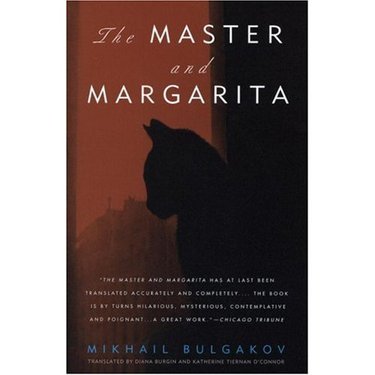
LITERATURE: Next Up: The Master and Margarita

073007l

While I still haven’t gone through the poetry (I admittedly skim) of Confrontation, I found myself really anxious to start in on this one, having held it as a treat to look forward to reading.

So I may not start it immediately, and I also have to post on Augustine’s Confessions, just couldn’t wait to commit myself publicly to Mikhail Bulgakov’s novel and hope that some of you have read it to help me along.

Posted in LITERATURE | Tagged | Comments Off on LITERATURE: Next Up: The Master and Margarita

LITERATURE: Confrontation No. 88/89 – The End of Fishing

This winner of the 2004 Sarah Tucker Fiction Award is well-written by Nan Frydland as to storyline, structure, plot and voice.  Some of the imagery is exceptional:

Mornings I listen to the birds for a while from bed, listen to them call each other in the early silver light.  The air is so warm, and by noon it’ll be sweet and yellow as melted butter. (p. 173)

This is the first person narrator relating the summers of her youth, spent with her grandparents and her aunt somewhere down south (Alabama?) (she lives up north with her mother) and where her father, whom she describes as a flim-flam man attempts to be a father for a day during brief visits. 

There’s some great characterization here, of the narrator and particularly of her grandparents, and a special memory of the three of them going fishing.  Frydland then brings in a closer look at the father-daughter relationship, and it becomes obvious that he doesn’t really care about her as much as his wheelin-dealin’ when he sets her up with a boy who rapes her viciously on a first date, then demands that she keep silent.

In my copy of this book, though I suspect in all, there appears to be some missing pages though the numbering is correct as the closing of this story comes out of nowhere, following a page that ends "Seems that" with no further thought or punctuation.  Then it jumps to the fishing hole being poisoned, and the grandfather’s pronouncement that "that’s the way of the new world.  I’ve seen lots of unnatural things done by men–you get what I’m saying?"  This, I suppose, is indication that while the grandfather believes what has happened is wrong, we’re helpless to fight against change, even the bad.

Posted in LITERATURE | Tagged | 1 Comment

LITERATURE: Confrontation No. 88/89 – The Getaway; The Acorn War

The Getaway by Martha Whitmore Hickman has a wonderful storyline, that of a woman raising a family in a small town in New Hampshire in the early part of the 20th century.  Rachel is different from most folks of her time, interested in astronomy and science.  Through a well-written and descriptive narrative of Rachel’s life, Hickman guides us through the death of a daughter, the marriages of her sons, and the final blow of losing her beloved husband, Cyrus.  What I found lacking, however, was a reasoning or feeling of how hard the loss of her daughter hit her.  Since it highly impacts the absolutely glorious ending of the story, it would have done well to linger a bit on this portion of the story.  Perhaps it was the details in other areas that took the reader’s attention that somehow made one skip over the obvious, I don’t know. Even the incredible, wonderful ending where Rachel takes action using her knowledge of chemistry and love of astronomy to blast away in a church steeple is a bit deflated by not the gathering together of these elements (that was cleverly done) but by the overexplaining final sentences, "I’ve gone with your father and Miriam," the note said.  "See you later."  It was in his mother’s handwriting. (p. 163) Other than that, I enjoyed it.

John Martin’s The Acorn War is what I would guess to be called psychological realism.  We are hearing the thoughts of a young boy as he talks about squirrels and imaginary dangers and how life could be grand if only, etc.  What we’re hearing is the thread woven through of a dysfunctional family and a boy who is beaten by his drunken father, belittled by his grossly overweight mother, and the kid takes his escape into daydreams.  He imagines acorns as weapons, the loud sound of their falling almost an audible version of his world.  Good, no terrific stuff that had me spellbound by language use, nor a story so different than what is a sad fact of life for so many.

Posted in LITERATURE | Tagged | Comments Off on LITERATURE: Confrontation No. 88/89 – The Getaway; The Acorn War

LITERATURE: Confrontation No. 88/89 – Proofreading

While completely understanding deadlines, typesetting, etc., all the pressures of running a magazine, I still find it hard to accept that in a journal of this caliber I’ve already found nine typos.

The worst part? Most of them appear to be words that would be accepted by Spellcheck in their erroneous form, i.e., "ever" instead of "every," or "than" instead of "that."

Posted in LITERATURE | Tagged | Comments Off on LITERATURE: Confrontation No. 88/89 – Proofreading

EDUCATION: Pascal’s Wager

From The Dilbert Blog morning entry on Pascal’s wager, I found my time-consuming, thought-provoking, contemplating, debatable topic for the day. More stuff to read here and here, and even then I doubt I’ll come to a conclusion.

Posted in EDUCATION | Comments Off on EDUCATION: Pascal’s Wager

REALITY?: Intervention or Invasion?

Following the sound–two hawks together in the field next door–I spot the mama turkey.  Can’t see the little ones but she’s obviously on alert, bending low, her head spins round and extends at my approach.  Focusing on the shrieks I zero in on one of the predators, perched atop a broken trunk of birch.  The hawk swoops down directly aimed at mama turkey; she flies up a few feet to meet it in a clash of wings.  He flies back, calling to his brother.  I run back to the house and call out Jim.

The two hawks keep their screeching up–though I would think they would be silent.  The turkey–I think that she’s alone out there, the chicks likely safely hidden–gets nervous at my approach.  One by land, two by air, and Jim too within her sights.  I can’t stand the idea of doing nothing to help her.  I circle wide around her to the trees and lift one hawk, then the other from their perches.  They arc around me, spiriling higher, the perimeters encircling mama turkey and me, though she doesn’t know that we are in this fight together, and I am on her side.  Eventually, both hawks leave and fly back across the road.

You’re welcome, I say and nod to her as Jim and I walk back to the house.  They’ll get them some time, he says; they’re young and just don’t know how to hunt. They’re hungry.

What right had I to intervene?  Two young hawks are on their own and trying to survive.  And here am I, protecting eight young turkeys.  I had no right to intervene in a natural battlefield of survival.

Posted in REALITY | Comments Off on REALITY?: Intervention or Invasion?

REALITY?: Neighborhood Noise

One by one they all return, husband, next door neighbor, and the family across the street.  Alone here all last week I catch them up on happenings, the news: the hawks, the turkeys, the man arrested in the killing of another man’s wife and daughters was arrested five years ago for break-ins in four local towns–one a family right here, just down and up the road, a customer of mine, a neighbor.  We’re not all close, no picnics here; we watch each other’s family, house and yard and know each other’s cars.  And we listen for each other’s noise.

Posted in REALITY | Comments Off on REALITY?: Neighborhood Noise

LITERATURE: Confrontation No. 88/89 – The Pace of Change

Byron Y. Adams has gotten us intimately into the head of his main character, William, partner in a law firm.  Opening the story in a men’s room where the elderly William notes that a young associate seems to always be in there at the same time, Adams exposes William’s prostrate problems that cause him many bathroom trips and the embarrassment of age.

Adams brilliantly uses William’s condition as the impetus for the conflicts (and understandably, tension) as he both faces and tries to hold off retirement and decisions regarding his relationship with his life partner, Tom.  There is a poignancy to this story that brings us along with William on something that we all must grapple with some day, and brought to us in an unusually mundane–base if not for the exquisite handling by Adams–and universally human need.

Posted in LITERATURE | Tagged | Comments Off on LITERATURE: Confrontation No. 88/89 – The Pace of Change

NEW MEDIA: The Simpsons & Religion

Religon & Ethics is a PBS show I’ve just tumbled upon (ironing=can’t compute=must do two things at once so as not to waste time [I even use my left hand to open jars and drawers and do things while my right hand is brushing my teeth or doing something else; same with refrigerator with the left/faucet and sink stuff with the right]=whatever’s watchable on TV as I’m ironing.

The show today was about a could things of interest.  First, the incarceration of innocent people and I missed most of that.  But the second portion of the show pointed out the amount of religion and spirituality that is written into The Simpsons. Fascinating analysis that will encourage me to look even deeper next time I watch an episode.  This was something I sure missed:  The characters of the show all have four fingers; if God is making a special guest appearance, He has five.  According to the narrator of the program, this was written in by the creators as a little spoof that God is part of reality, but the Simpsons are not.

Posted in NEW MEDIA | Comments Off on NEW MEDIA: The Simpsons & Religion

LITERATURE: Confrontation No. 88/89 – Lost Souls Go Wandering

Written by Jane Bradley, this story is a second person pov, about a woman whose husband has just told her "we have no future, Alice" and covers a very brief period of time as she sits at an airport bar waiting for a connecting flight to go home alone. 

God knows why, but this woman responds to a stranger sitting next to her at the bar and he takes her off to an area hidden from view and things go downhill quickly.

The character didn’t get my sympathy because while it’s obvious she’s hurting and the immediate need for validation is natural, to go wandering off between flights with some sleazebag at a bar?  And he is a sleazebag:

You glance at the doorway.  "Are you sure no one’s there?"  "I’m always certain before I make a move," he says. (p. 135)

Note the "always"?  Besides, even if he was Mr. Wonderful, there’s this:

"That’s it," he whispers.  He grins and kisses, saliva slipping at the corner of your mouth.  As he feeds on you, you swallow the wetness that seeps up from his mouth like a spring.  (p. 134)

Yuck.  ‘Nuff said. (Aside from the sappy sex, the ending was rather tritely tied in to that "no future" statement so it’s really not worth any more words on this one.)

Posted in LITERATURE | Tagged | Comments Off on LITERATURE: Confrontation No. 88/89 – Lost Souls Go Wandering

LITERATURE: Confrontation No. 88/89 – Gorgeous World

This story stands out from the rest as daring in content: the first person narrator, a Thalidomide baby now grown, who has his first sexual experience with an overpainted, boozing, drug-loving, epileptic midget (little person), with a twist of humor and sad loneliness that’s presented in a fine voice and style by Alicia Gifford.

Oh, and did I mention a bitten-off penis?

It takes a good writer to throw all this together and pull it off, and Gifford, I believe, has done it.  I remember in one of my CW classes that one of the first student stories offered for workshopping was of the accident occuring just as the driver’s getting a blow job and the expected result.  But it was the usual amateur mistake of making that moment the climax (no pun intended) of the story, when it was so obviously built up to that particular focus as a shocker.  In Gorgeous World, the scenario is but a moment on the way down the arc, a confirmation of a decision already made, so well used by the author.

There’s also a nice contrast in what the narrator is saying to what we think he feels, and not in the usual sarcastically flippant manner.  In the opening line, "I’ve forgiven my mother, she didn’t know what she was doing," we are pulled in and interested as he relates the circumstances of his birth.  There is delicate subject matter here, in describing what surely is the heartbreaking reality caused by the drug, as well as the fact of his girlfriend, and Gifford handles it in a very down-to-earth, politically incorrect, and yet open and honest manner.  Humor is a healer, and the narrator’s nickname of Penguin is just the beginning of acceptance and a road to normalcy.  Open honesty may hurt, but it is better than proper words that offend even more by their attempted masquerade.

Entertaining, provocative, and one story that’ll stick with you.


Posted in LITERATURE | Tagged | Comments Off on LITERATURE: Confrontation No. 88/89 – Gorgeous World

LITERATURE: Confrontation No. 88/89 – This is the Part to Wonder

Normally I dislike first person revelatory introspection stories, but this by Katherin Nolte is smooth and quick enough to overcome the typical flippant and sassy attitude of a life gone wrong and the paths it might have taken instead.

Roseanne begins by telling us, "My breasts were important to me, but I wished I’d been born a genius." (p. 104) Right there, with the opening line, I felt this story would be different from all the rest because it was stylistically well done.  It opened up the story with all kinds of quesitons while giving valuable insight into the mind of the narrator.

The story becomes one of extreme lack of self-confidence and family dysfuntion without being painfully corny or trite, and Nolte seems well familiar with the subtleties simile in getting a point across:

"Well, not stupid really, but I figured since I wasn’t a genius, why even try to be smart.  It’s like those musicians who devote their lives to studying an instrument, only to attend a concert and hear another musician blow them away." (p. 104)

And a nice homage to Margaret Atwood’s short story, Endings, in closing with a "what if" frame of mind of the narrator as she offers the reader the same possibilites of her dreams as that of her reality. 

Nolte’s writing style and use of different techniques certainly raised This is the Part to Wonder above the usual run of the mill stories in this vein. 

Posted in LITERATURE | Tagged | Comments Off on LITERATURE: Confrontation No. 88/89 – This is the Part to Wonder