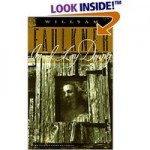
LITERATURE: The Classics

One of the bestest things to come of my habit to read Philosophy concurrently with someone like Faulkner, McCarthy, Marquez, Steinbeck, etc., is the accessibility of the two and how they braid together, one teaching the other in their relationship.

I have been lucky in my choices of selection and timing: Boethius with The Sound and the Fury and Child of God; Symposium and Phaedrus with their explanations of love in a time of tragedy and loneliness of As I Lay Dying. 

Especially in the form of multiple points of view of Faulkner’s writing, one character has opinions of the others, becomes judgmental.  Anse has been shown as hard and cold, working Addie to death and now disrespecting her by toting her body forty miles away from their own family burying ground.  But all you have to do is watch Anse as he stands above her deathbed.  You see the love there than transcends the here and now, just as the close forgiving love that Plato tries to set apart from the committed love of marriage.  One explains the other.

Posted in LITERATURE | 1 Comment

BLOGGING: On Voices

God bless blogging.  The freedom of speech that is slowly being taken away here in America is and always will be allowed by some Divine Power to exist. 

I just wandered onto a site that is self-proclaimed as atheistic, and since I find that seeing the other side of things often serves the purpose of either strengthening my position or modifying it, I started reading.  I cannot here show examples since I would not without proper credit and just don’t want to get all that involved in recriminations and arguments, but it was as blatantly opinionated and filled with false logic as any religious fanatic’s might have been in an opposite direction.  The arguments were of the ends justifying the means format, instead of logically one step following another to conclusion.  You know, God is all good and can only create good, so if evil exists, then obviously there is no God.

Just a vague example, it attacked the Lenten tradition of fasting as supposed to be a serving of the body and so in a direct contradiction to its purpose.  Who ever said fasting was to serve the body?  To give to the poor was pooh-poohed as being destructive–since you know they’ll just waste it on booze and drugs, so this Christian-like practice was a bad one too.  You get the idea.

Sounds like something from The Onion where it would be read for the spoof it would be.  But still, God bless blogging and the availability of the diversity of mankind.

Posted in BLOGGING | 1 Comment

LITERATURE: As I Lay Dying – A Grammar Lesson

Man, after this novel if I don’t get it right I’ll give up.  (I’ve just gotten used to good and well.)  Addie, for eighty pages, has been lying in her bed, and now in her coffin, where they laid her.

It’s the question of Lie versus Lay, and if you click the link, it’ll bring you to a page that I’ve learned to keep handy while I post on Faulkner’s book (I’m not going back to correct the incorrect usage up to this point) where it will lay beside my computer as I type.

Posted in LITERATURE | Tagged | Comments Off on LITERATURE: As I Lay Dying – A Grammar Lesson

REALITY? & WRITING: Randomly and Yet in Perfect Plan

My thoughts today, I need to air them all to write them here as in a recent someone’s weblog defending blogging as a voice that can be heard and hearing voices of all that choose to speak, not then, to replace the media nor the mediums of books and gatherings.

I feel full up as an unmilked cow.  Today it all comes out in buckets, the lotto of the extra bar of candy from your quarters in the machine.  It belongs, of course, to the person who has just walked away in angry frustration, but can you find him in the crowd?  The pumps uptown, the second on the streetside, dribble gas long after clunking shut.  Does it belong to me, or to the next car or the station?  How we justify standing there and milking it until our conscience signals what is fair.  And will I stand there longer next time, stretching boundaries with each passing fillup?  Will having money change my squeezing out that milk of transportation?  In fact, in contradiction to the evil it’s supposed to bring. Is what we read, experience, taste touch and smell a setting of new limits?

Today my mind is filled up to the brim with one particular focus.  Started by he who throws a simple question out that needs full days of answering.  Are characters developed from experience and then let loose to wander on their own?  Writing life or writing stories, it’s all the same.  There is a starting point, there is an unknown journey.  Gopher holes and mountains change the way. 

Posted in REALITY, WRITING | Comments Off on REALITY? & WRITING: Randomly and Yet in Perfect Plan

LITERATURE: Phaedrus – Equality in Love

One of the things I’d noticed in Symposium, and that Phaedrus elaborates upon in his opening statements to Socrates in Phaedrus, is a further separation of form of love into lover and beloved.  This notion has become foreign to us in this day of equality, of choosing partner by love that is mutual (although by no means is this a fact in all relationships).  But another point that Phaedrus makes is more relative; that of the honesty between non-lovers becoming of more importance in its very freedom:

Further, I say that you are likely to be improved by me, whereas the lover will spoil you. For they praise your words and actions in a wrong way; partly, because they are afraid of offending you, and also, their judgment is weakened by passion. Such are the feats which love exhibits; he makes things painful to the disappointed which give no pain to others; he compels the successful lover to praise what ought not to give him pleasure, and therefore the beloved is to be pitied rather than envied. But if you listen to me, in the first place, I, in my intercourse with you, shall not merely regard present enjoyment, but also future advantage, being not mastered by love, but my own master; nor for small causes taking violent dislikes, but even when the cause is great, slowly laying up little wrath-unintentional offences I shall forgive, and intentional ones I shall try to prevent; and these are the marks of a friendship which will last.

This to me brings up the notion of more perfect love.  The unions formed by friendship rather than romance or lust.  It doesn’t depend upon gender, and as a matter of fact, should not be affected by it.  While in Plato’s time the man/youth relationship was a strong and loving one, it was affected eventually by sexuality, just as still today we see the bonds of male/female relationships and the possibilities negated often by the implied physical form of love. 

I’ve always fought this notion; even when greatly proven wrong time and again.  My greatest friends in largest number have always been male.  Unfortunately, my partners have almost always needed the inclusion of a sexual relationship to comprehend the friendship.  So it is not hard to understand the bond of man to man, woman to woman, in the comprehension of the way of thinking, and yet the gender places boundaries on that love–for it is often truly love that brings the minds together.

Posted in LITERATURE | Tagged | Comments Off on LITERATURE: Phaedrus – Equality in Love

REALITY?: On the Personal Side

I tend to compartmentalize, rationalize, justify.  Bad runs are tagged by years.  Strange, even as I try to break the time barrier and the concept of minutes, hours, days, months, and the most important nanosecond in which decision changes the course of life.  And life, of course, may have begun centuries ago and may go on for an undefinable period of time that cannot be comprehended, much less measured.

Be that as it may, in human time, this year labeled 2006 started out as badly as the two before in promise.  Without Christmas there was no recognition of the New Year.  Two children died.  Cash was drained to soup levels.  Home and hearth were jeopardized and as two gypsies, we considered following the crowds to the new Land of Milk and Honey in the deserts of the west.  Things are changing now; it appears that with an excellent offer of employment for the man we once again can breathe and start tomato plants on tables lit by daylight bulbs down in the cellar.  I need to find someone to want my skills to bolster back my confidence, or else increase the business in the shop to survival levels, but that is not as urgent as it was.

Proudly I look down upon the pile of books I’ve read, forgetting that I have no place left to shelve them.  Happy to see spaces in the lineup to be read, already planning what to fill them with as soon as I am able.  Discovered Faulkner and Marquez these past few months, and that alone provided soul and mind food.  Aristotle, Plato, Boethius have affected me, and there are so many more to learn; I can’t imagine who I’ll be when this human span of year is into heat of summer sun, covered with the leaves of Fall.

The hardest thing right now–and I think that it is temporary–is to recover the creative side of who and what I am in time.  It has been necessarily overwhelmed by the practical instincts of survival and the demands of reality.  I need to reach the intersection where the road fans out in invitation of promises and the unknown.  I see it there, ahead of me; I just can’t read the signposts yet.
Posted in REALITY | 6 Comments

LITERATURE: As I Lay Dying – Faulkner Faces Time & Space

Faulkner obviously loved to play with the question of time and space, effectively seen in The Sound and the Fury.  But I love this passage in As I Lay Dying, where Addie’s youngest boy, Vardaman, runs from the room just as she has died:

Then I begin to run.  I run toward the back and come to the edge of the porch and stop.  Then I begin to cry.  I can feel where the fish was in the dust.  It is cut up into pieces of not-fish now, not-blood on my hands and overalls.  Then it wasn’t so.  It hadn’t happened then.  And now she is getting so far ahead I cannot catch her.  (p. fifty-three)

Vardaman is referring to a fish he’d caught earlier that his father, Anse, made him gut by himself.  He is about eleven years old, and his concept of life and death is likening his mother to the fish, the place where the fish was flopping alive just a bit ago, and his mother was still breathing.  A child’s wonder at the passing of time and of life, and yet are we ever resolved as adults to an answer?

NOTE ADDED: Guess I nailed it:

Vardaman:  My mother is a fish.  (p. 85)

Posted in LITERATURE | Tagged | 1 Comment

LITERATURE & WRITING: Good Reading Intimidates

Ah, just when the muses had returned, poked me with their golden staffs and had me hopping, hoping; I read Faulkner:

Pa stands over the bed, dangle-armed, humped, motionless.  He raises his hand to his head, scouring his hair, listening to the saw.  He comes nearer and rubs his hand, palm and back, on his thigh and lays it on her face and then on the hump of quilt where her hands are.  He touches the quilt as he saw Dewey Dell do, trying to smoothe it up to the chin, but disarranging it instead.  He tries to smoothe it again, clumsily, his hand awkward as a claw, smoothing at the wrinkles which he made and which continue to emerge beneath his hand with perverse ubquity, so that at last he desists, his hand falling to his side and stroking itself again, palm and back, on his thigh.  The sound of the saw snores steadily into the room.  Pa breathes with a quiet, rasping sound, mouthing the snuff against his gums.  "God’s will be done," he says.  "Now I can get them teeth."  (As I Lay Dying, p. 51)

Dangle-armed, not arms dangling; humped, not hunched over.  It is the language Faulkner uses to describe action without using adverbs; turning them to adjectives as if they belonged there.  This same phrase has been repeated in a slightly different way, just as Faulkner has repeated Anse’s movement of wiping his hands before he touches Addie, who has just died.  Do you think Faulkner’s run short of words?  Not when he uses others such as "perverse ubiquity."  The saw has repeatedly been "snoring" into the room, where the dying woman had lain in her bed.  How perfect the word used to simulate the making of her coffin to the woman they hope is just sleeping on her bed.

I used to be inspired to write by reading good writing.  But with Faulkner and McCarthy and Steinbeck, I am halted.  There is no way I can ever hope to write like this; my writing will improve with every reading, but I will always be a hundred steps behind those I admire.   

Shall I be content with reading, then; to soar within the language used in stories told by others?  Methinks so.

Posted in LITERATURE, WRITING | Tagged | 2 Comments

LITERATURE: As I Lay Dying – Character Empathy

Part of character development is to establish reader identification with the characters, especially the protagonist.  In Faulkner’s novels, with the multiple points of view, we’re never sure exactly who that is.  What’s more, we have to learn to separate good viable information from opinion, action we see versus what a character sees and relates to us. 

Who do we trust?  Who knows the whole story?  Here’s neighbor Cora’s take on it:

She lived, a lonely woman, lonely with her pride, trying to make folks believe different, hiding the fact that they just suffered her, because she was not cold in the coffin before they were carting her forty miles away to bury her, flouting the will of God to do it.  Refusing to let her lie in the same earth with those Bundrens.  (p. 22)

Yet we already know from Addie’s husband, Anse, that this is her wish.  Anse himself is reluctant but determined to see it through.  Yet he is judged for this decision as if there is no love and caring for his wife.

Faulkner’s windows in the house of story he builds are many, and he allows us to peek inside them all.

Posted in LITERATURE | Tagged | Comments Off on LITERATURE: As I Lay Dying – Character Empathy

LITERATURE: As I Lay Dying – Character by Character

Faulkner’s novel is told by the characters, mainly the members of the Bundren family; a similar technique that he employed in The Sound and the Fury.  The immediate tension is the knowledge that Addie Bundren is lying very ill in her bed while her sons, daughter, and husband speak in hushed tones while going about the daily routine of living.  There is the sawing of wood as her eldest son, Cash, builds a coffin.  There is the confusion of worry and non acceptance of her husband, Anse.  There is the innocence and lack of knowing what to do in the middle of what is very likely an impending tragedy and loss.  Do we have time to get to town and back?  Will the upcoming rains wash out the road?  All the while the neighbors are questioning Anse’s decision to bring his wife’s body forty miles away to her own birthplace; back to lie in the cemetary of her own family.

It is a death watch.  I’ve been there.  Faulkner pins down his characters with the spectrum of emotional versus practical reactions that we bring with us in the face of death.

Posted in LITERATURE | Tagged | Comments Off on LITERATURE: As I Lay Dying – Character by Character

LITERATURE: Symposium

Finished Plato’s Symposium and will be moving on to Phaedrus, but I know that I would like to eventually get the book form (I’ve been reading it online) as it seems to be wanting of a more continual thinking on the premise of the place and meaning of love that indeed, may change in meaning as one changes with learning.

Of the speeches on love by those present at the discussion, one appears to build upon the other in exploring the forms of love, in separating the physical from the spiritual, the good from the disruptive, the purpose and the happiness it offers on a higher plane.  It covers homosexual love, but in a way that I would think is elevating it to a place beyond the sexual attraction just as male/female love is disregarded for its baser instincts to focus on the friendship of love.

There are implications of love’s ability to go awry in its being sought for wrong purposes, and there is promise of its everlasting nature if understood and not abused.  There is obviously much more here to read into Symposium, and I’m sure I’ll be rereading portions, especially as Socrates tells of his teaching  by Diotima in the theory that ties in Boethius’ own concept of seeking good, along with the next reading of Phaedrus as things become more clear.

Posted in LITERATURE | Tagged | Comments Off on LITERATURE: Symposium

STORIES: Over Walls and Under Fences

There are some boundaries men were never meant to cross.  To marvel and ponder, yes, that which lay beyond the reach of human mind and aching fingers, but never to degrade the gods by returning to the ape he is because of lust and ego.  Puffed and flattered, he who seeks the crown of his creators reveals the very flaw in the master plan.   In His own image He did create them.   

Even as the lock is picked and Dolly baaas as loud within her cell as in the worshiped throat of her own mother, it is that spark of life that has been stolen, not mimicked, to break the barriers of time.  That which was in one form will never change nor will it die in yet another.  Or so John Ackroyd Fuller always thought.

Posted in STORIES | Comments Off on STORIES: Over Walls and Under Fences

WRITING: Feedback

I know I’ve mentioned Crapometer here before, but I must again say how helpful this website is as a workshop session for writers.  I just took the plunge with "Big  Tim Dawson" to get some suggestions and was very happy to see that the commentors had zeroed in on a few things in the story that I’ve long since become blind to.  Sometimes, you just need the feedback to point out a path and before you know it, you’re happily tripping along again. 

I highly recommend this site, but would also suggest that you read some of the other submissions and comment with input before you submit an entry,  as a matter of courtesy.

Posted in WRITING | Comments Off on WRITING: Feedback

LITERATURE: As I Lay Dying

030106l While it was my best intention to hold off on the reading except for Plato, Macromedia learning and catching up on the lit journals, I couldn’t help it.  Honest, I just walked near the lineup of books and Faulkner slid out of its slot and flew into my hand.  As I crossed the room to set it down on the coffee table, I found I’d already read three pages.  It’s gotta be something in the atmosphere…

Posted in LITERATURE | Tagged | Comments Off on LITERATURE: As I Lay Dying

LITERATURE: Symposium – On Love and Hiccups

In the midst of a deep dinner discussion about the forms of love, I find this amusing bit:

"Pausanias came to a pause-this is the balanced way in which I have been taught by the wise to speak; and Aristodemus said that the turn of Aristophanes was next, but either he had eaten too much, or from some other cause he had the hiccough, and was obliged to change turns with Eryximachus the physician, who was reclining on the couch below him. Eryximachus, he said, you ought either to stop my hiccough, or to speak in my turn until I have left off.

I will do both, said Eryximachus: I will speak in your turn, and do you speak in mine; and while I am speaking let me recommend you to hold your breath, and if after you have done so for some time the hiccough is no better, then gargle with a little water; and if it still continues, tickle your nose with something and sneeze; and if you sneeze once or twice, even the most violent hiccough is sure to go. I will do as you prescribe, said Aristophanes, and now get on."

The move of the conversation is towards a form of love that is held in higher place than simply of the body, and perhaps is why they relegate male-female love to a lesser plateau than that of man and youth.  Though while this may include a romantic and homosexual form in its physicality and feeling, it is also, to me, a place to which heterosexual love should aspire, as well as that of friendship which is deep enough to encompass all. 

Some quotes and thoughts will follow soon.

Posted in LITERATURE | Tagged | Comments Off on LITERATURE: Symposium – On Love and Hiccups