CURRENT AFFAIRS: State of the Union

Something becomes fodder for jokes when it both appeals to and appalls common sense.  The strangest part is that it then becomes accepted fact, and a sad joke at that:

American Business at its best…

Toyota, a Japanese company, and GM, an American company, decided to have a canoe race on the Missouri River.  Both teams practiced long and hard to reach their peak performance before the race.  On the big day, the Japanese won by a mile.

Afterward, the American team became very discouraged and morally depressed. The American management decided the reason for the crushing defeat had to be found. A Management Team made up of senior management was formed to investigate and recommend appropriate action.

Their conclusion was the Japanese had eight people rowing and one person steering, while the American team had eight people steering and one person rowing. So American management hired a consulting company and paid them an incredible amount of money.

After six months of hard work, they advised that too many people were steering the boat, while not enough people were rowing.  So the American Team acted:

To prevent losing to the Japanese again next year, the rowing team’s management structure was totally reorganized to four steering supervisors, three area steering superintendents and 1 assistant superintendent steering manager.

They also implemented a new performance system that would give the 1 person rowing the boat greater incentive to work harder. It was called the "Rowing Team Quality First Program," with meetings, dinners and free pens for the rower. Even new paddles and medical benefit incentives were promised for a winner. "We must give the rower the empowerment and enrichments through this quality program."

The next year the Japanese won by two miles. Humiliated, the American management laid off the rower for poor performance, halted development of a new canoe, sold the paddles and canceled all capital investments for new equipment. 

The money saved was distributed to the senior executives in appreciation for a job well done.

(Credit given to whoever came up with this, and while it flies across this great land from work station to work station, it will, I am sure, never reach those burnished desks where it will not even be understood.)

Posted in CURRENT AFFAIRS | Comments Off on CURRENT AFFAIRS: State of the Union

BLOGGING: On Comments

From John at J-Walk, in his post on Kottke’s post on weblog comments:

"Without the comments, it would be like talking to myself and I’d soon lose interest in my own blog."

Yep.

Numbers mean nothing.  As a matter of fact, it’s worse when people read and have nothing to say in response.  So my deep gratitude and thanks to all who have kindly left comments over the years; it means a lot.

Posted in BLOGGING | 2 Comments

LITERATURE: The Consolation of Philosophy – POV

I’ve strayed in faithful reading of Boethius’ Consolation in that I have felt too personally in need of the lessons, therefore, thinking that my interest and my understanding of it was taken in a selfish way rather than for the wisdom it imparts of all mankind.  It was unfair, I felt, to judge and comprehend the reading with the evident taint of this personal desire to seek meaning.

However, in reading more of Philosophy’s reply to Boethius, I discovered that the presentation of the book in first person point of view may necessarily be a ploy for that very reason.  Boethius, as author, already knows both sides of the conversation, is indeed responsible for the voice of Philosophy herself.  He knows where it will lead–even as it leads him in his thinking.  This is not a diary or simple journal to himself; it is meant for furthering the understanding of man and theory.  Using this first person makes it a personal story, and yet, with our knowledge of POV, we understand that it brings the reader in.  Very often the first person POV–to me at any rate–is most annoying as it does not relate to my own character traits or place and state of being.  Reading "I" and disagreeing with it can unsettle the mind.

So then, I can more readily accept the reading if I, along with Boethius, are in this conversation with Philosophy together:

"First," Philosophy said, "will you let me test your present attitude with a few questions, so that I can decide on a way to cure you?"  (p. 14)

"Yes,"  Boethius and I reply.

Posted in LITERATURE | Tagged | Comments Off on LITERATURE: The Consolation of Philosophy – POV

LITERATURE: BASS 2005

Death Defier by Tom Bissell (page 174) goes a bit further into layering stories and presenting the reader with some work to define the theme.  The main story in the past tense third person POV is of a journalist (Graves) and a photographer (Donk) who have hooked up in Afganistan and are attempting to travel through dangerous war zones along with a guide (Hassan) who they’re not sure they can fully trust.  Graves is ill with malaria, and this along with the danger of the journey provide both the points of stress and conflict as well as the underlayment of death that Donk carries with him as a mental burden since his father’s death.

While the premise may appear as man against society, and this is fully covered in Donk’s wonderings about the comparisons and contrasts in human nature on a global scale, it is also his private man against himself in his reflections of death as he’s experienced it, from the quiet death of his father to the tortured deaths of those he photographs in his travels.  Now facing the possible death of his friend, Graves, he does all he can whilst being frustrated by the conditions and lack of assistance.  The ending is a satisfying and surprising twist both for those who enjoy the head-scratching "I’ll have to think about this one " as well as those who demand a more traditional ending to an adventure story.

And I must exclaim about the writing:

Graves smiled.  "Old men have to die.  The world grows moldy, otherwise."  (p. 198)

The man’s face, Donk thought, was 70 percent nose.  (p. 199)

"Mister Donk," Hassan said, apprehensive to be violating Rule One, "you are well?"  "Fine," Donk said.  "Some dirt in my eye."  Hassan almost smiled.  "Both eyes?"  Hassan was smarter that Donk realized.  Everyone, Donk thought, was smarter than you realized.  "Yes, Hassan.  Both eyes."  (p. 203)

The Girls, by Joy Williams (p. 212) is a delightfully told story that is woven together by an underlying resentment of two sisters who are content to live in an world created to manipulate their parents and everyone else while keeping it safe from interference of boyfriends and houseguests.  They are cruel in the way of Dorothy Parker’s characters; self-centered and malicious in a place in time that is also very reminiscent of Parker’s 40s and 50s wealthy residents.  Nicely written, the story is well drawn out into the characters, and yet there is again here an ending that is both unexpected and leads one to wonder what major changes the girls will be undergoing from the climactic event, or, if indeed, it is something well planned for.  Good entertainment, good study in story elements.

Posted in LITERATURE | Tagged | Comments Off on LITERATURE: BASS 2005

LITERATURE: BASS 2005

First Four Measures by Nathaniel Bellows is a rather odd bit of story abut a fourteen year-old boy who tries hard to gain his piano teacher’s approval, and it seems, physical touch, though we aren’t quite sure if it actually is a sexual or intense creative overture by the instructor.  His parents go off and leave the boy in the care of a housesitter who also has what appears an attraction to the boy, and there is a jealousy of sorts that is evident after she tells the boy’s parents about seeing the piano teacher’s moves.  It is a true character revelation as even the boy himself obviously manipulates all the adults.  Sensitively presented, and while I felt rather wanting more clear information, it may be the skill of the author to leave us as uncertain as the boy himself is in his desire as well as his suspicions.

Charles D’Ambrosio’s The Scheme of Things is based more on action to produce the conflict, while gradually revealing the main characters in their reactions.  Kirsten and Lance are ex-cons, down on their luck, traveling the countryside in a beat-up car and trying to sucker folks into donating to a legitimate foundation for aid to drug-damaged newborns even as they decide to keep what little they manage to solicit for themselves. Kirsten is psychic, and acts as the front man, and at one point they stay a couple days with an older couple who readily share what little they have.  When they leave, Kirsten is amused and a little upset to find that the jewelry Lance has stolen from their hosts is paste, and the corn he’s filled the back seat with is all cow corn.  Interesting delving into the side of people who even in desperation may be affected by the plight of others, yet still take advantage of them.

I love Alice Munro’s work; it always is so simple and straightforward about a common situation, and yet it’s the underlying story that the reader slowly becomes aware of being the main focus.  What’s happening is the impetus, the action; in this story, The Silence, a mother goes to pick up her daughter from a commune that she suspects is a cult, the daughter is gone, and the mother’s life changes and goes on in waiting for the girl who never does return but leads her own separate life.  Munro has an excellent way of moving time both backward and forward from her immediate action starting point that provides insight into the characters even as it reveals their growth and changes.

Posted in LITERATURE | Tagged | Comments Off on LITERATURE: BASS 2005

WRITING: Similes that Sizzle/Fizzle/Drizzle out Your Ears

Foam_mattressPeeked out into the three a.m. darkness to see yesterday morning’s snowfall damaged by the warming afternoon.  Sunken in depressions like a Temperfoam mattress.”

OR

“Went shopping for a back-relieving foam mattress, lumpy like the morning’s snowfall melted by the warming afternoon.”

012406w2

Near perfect in accuracy, and yet uneloquent in either case.  Metaphors and similes must be magic, relative to bring the instant imagery and yet produce the pleasing, the horrific, the nodding-yes of acceptance in the reader’s mind.

(NOTE:  Someone, somewhere–and I suspect it was at MetaxuCafe–posted about inappropriate metaphors in a particular short story collection and that post inspired this one.  But I can’t remember where I read it, so I can’t give appropriate credit.  I hate that.  I hate when that happens.)  (NOTE #2:  Just found it via Metaxu at Bookface.)

Posted in WRITING | 3 Comments

BLOGGING: Ex-Bloggers

Where are they now?

We’ve all been through it, go through it again and again–the decision whether to keep it up.  We regret the decision made to leave by friends we’ve never met.  We snicker, they’ll be back, because we know like nicotine and whiskey, blogging is addicting.  We admire those who’ve left to spend the time they’ve recognized as wasted instead on real writing; the novel, the poem, the job.  We’ve sighed at their much-cleaner houses now, as we look around our own.  We miss their words, and yet, when seeing how our own are spent, most often misinterpreted, ignored except for some occasional recognition of a feeling or a thought, we wonder too if life is better on the path they’ve chosen.  Life should be more private, I suppose. 

Posted in BLOGGING | 5 Comments

REALITY?: Superstitions

I search and search for the last sympathy card of three I do remember buying a month or more ago.  I cannot find it, and wonder if it too was sent and where.  And the first two, sent out together like a pair of mourning doves; whose loss made those essential?  I remember one, and a cloud of guilty grey decends because I can’t recall the others.  They were, I know, people someone loved.

I need one now.  Tomorrow I’ll go out and pick up three, the way my mother taught me.  Because too, I think the second one is almost spoken for, a whimper barely heard or known but sadly understood.

Posted in REALITY | 1 Comment

LITERATURE: The Bible

Something else from beyond the centuries to ponder:

What does it profit a man
if he should gain the whole world
and lose his own soul?
Or what will a man give in exchange for his soul?

                          Matthew 8:36

Materialism, and yet how is it weighed in excess against what is sought for survival?  Obviously, the words are not meant to shun the gifts of God (or his significant other aliases) but to put them to use, to explore and expand them for the benefit of all, or harbor and hide them uselessly–that, I would think is where the potential loss of soul would come in.  Greed is never a good thing, and yet the level of greed is individual to each man.  What is necessary, what can be shared, what is one used to, what has one earned to allow enjoyment of and retention therefore, without guilt.  Is the principle of justice and fair division a good thing to seek if it still hurts another who doesn’t understand or agree?  Tough questions; no easy answers.

Posted in LITERATURE | 1 Comment

LITERATURE: BASS 2005 – Writing

I want to get one or two more stories read before I do another review of Best American Short Stories – 2005, but this is one of the reasons I read, to catch the writing style, and too often my immediate delight is forgotten when the story’s done.  So…

Hassan looked at Donk and shrug-smiled, his eyes rimmed with such a fine black line they looked as if they had been Maybellined.  (BASS 2005, p. 175)

The sentence is from Death Defier by Tom Bisell.  The stop-me-dead words are "shrug-smiled" and "Maybellined." 

I love when nouns are turned into verbs, verbs into adjectives , etc.  I love nothing better in my own writing when I check out those squiggley green lines from Windows spell-check and click "ignore." 

It’s man over machine.  Creativity over proper form.  It’s a love of language and the ways it can be twisted to say exactly what you see and feel when the language as it stands cannot fulfill the need.

Posted in LITERATURE | Tagged | Comments Off on LITERATURE: BASS 2005 – Writing

LITERATURE: Consolation – Philosophy’s Reply

After quietly listening to the complaints and woes of Boethius, Philosophy understands and focuses not on the situation in which Boethius finds himself, but to the degree of which he has allowed it to unsettle him:

"When I first saw you downcast and crying, I knew you were in misery and exile.  But without your story I would not have known how desperate your exile is."  (Consolation, p. 13)

And now the good stuff:

"You have not been driven out of your homeland; you have willfully wandered away.  Or, if you prefer to think that you have been driven into exile, you yourself have done the driving, since no one else could do it.  (…)  Surely you know the oldest law of your true city, that the citizen who has chosen to establish his home there has a sacred right not to be driven away.  the man who lives within the walls of that city need not fear banishment; but if he loses his desire to live there, he loses also the assurance of safety.  And so, I am not so much disturbed by this prison as by your attitude.  I do not need your library with its glass walls and ivory decoration, but I do need my place in your mind.  For there I have placed not books but that which gives value to books, the ideas which are found in my writings."  (p. 13)

Is Philosophy then saying that the knowledge and theories that are in the mind are what create the "place" in which to reside?  Is there a physicality to the mind, can it be relocated, moat and drawbridged, burned down, swept away by the floods of dissension?

And, is the place where one resides not the material made of stone and earth, but just within the confines of the mind; as books are physical, the ideas are not.

Has Boethius then created his own prison?

Posted in LITERATURE | Tagged | Comments Off on LITERATURE: Consolation – Philosophy’s Reply

REALITY?: Birth and Death

Two children on my mind:  one born on Monday, unheralded and unexpected, fighting for a life that reads as grim; the other, full of fifteen years who’s given up the fight and chooses death instead.

So close I touch them, and yet, with what wisdom could I save them?  Too late, too late.

Posted in REALITY | Comments Off on REALITY?: Birth and Death

EDUCATION & REALITY?: Education & Purpose

Not a little sad that even now, in seeking employment after taking even that one step further in education, my own alma mater won’t bother responding much less ecstatically welcome my offer to serve.  Odd that what we supposedly learn by pursuit of learning is that it doesn’t apply to the real world.  Why bother with grammar and English and communication if the institution itself doesn’t practice what it preaches?

Maybe Walmart is less discriminating and more polite.  Wonder if they pay enough to salvage the money wasted on "education."  Even as academics lament the loss of literature, and corporations bemoan the state of the language, it seems clear that college need be geared instead toward the latest version of software rather than the basics and classics if it indeed has anything to do with future career choice.  Screw Western Civ and Stats and Compositon–there’s always spell check and the research button–concentrate on overcoming the laziness to depend on these miracles instead of knowledge that would preclude needing them.

I’m outta here.

Posted in EDUCATION, REALITY | 1 Comment

REALITY?: Wisdom

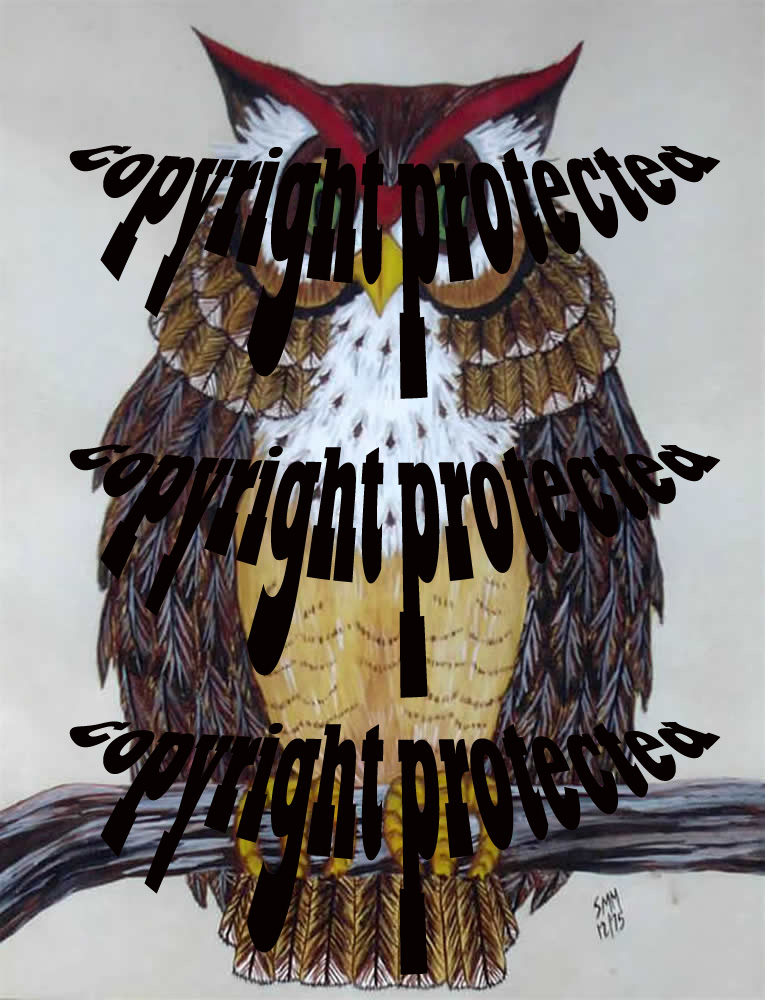
The symbol of freedom, the eagle.

The symbol of wisdom, the owl.

Man’s need for symbols, for pulling from nature that which is just what it is and creating for it a crown it must bear, when all it wanted to be was an eagle, or an owl.

Posted in REALITY | 5 Comments

LITERATURE: The Consolation of Philosophy – Look Inward

Boethius’ litany concludes with a poem:

"Harsh punishment, deserved by the criminal, afflicts the innocent.  Immoral scoundrels now occupy positions of power and unjustly trample the rights of good men.  Virtue, which ought to shine forth, is covered up and hides in darkness, while good men must suffer for the crimes of the wicked.  Perjury and deceit are not held blameworthy as long as they are covered by the color of lies.  When these scoundrels choose to use their power they can intimidate even powerful kings, because the masses fear them.

"O God, whoever You are who joins all things in perfect harmony, look down upon this miserable earth!  We men are no small part of your great work, yet we wallow here in the stormy sea of fortune.  Ruler of all things, calm the roiling waves and, as You rule the immense heavens, rule also the earth in stable concord."  (Consolation, p. 12)

Before I look into Philosophy’s reply, I look at Boethius’ ending statement.  After railing against the injustice of man-made laws, he questions why a God who has created all things, has not allowed a perfection of man that would be alike in the nature of all other creation, such as heaven and earth, man being just one of these creations.  It seems to question the wisdom or control of a supreme being in not creating an incorruptible human form.  Or, is it the questioning of the existence of a supreme being? 

Posted in LITERATURE | Tagged | Comments Off on LITERATURE: The Consolation of Philosophy – Look Inward