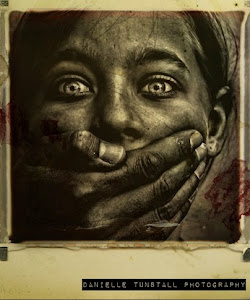
WRITING: Magical Realism

There was no good explanation but it was a clear fact, established by first one then another tentative admittance by the bolder folks in town. The sky on the night Eva Reinhold died was a bright vermillion red.

Posted in WRITING | Comments Off on WRITING: Magical Realism

LITERATURE: BASS 2007 – Riding the Doghouse

This short story by Randy DeVita is very well put together.  Opening with a scenario of a father getting up in the night to check on his young son, it goes into recall of the man’s own relationship with his truckdriver
father and a particular incident when he rode along with him.

The trip was a usual one, but the conversation in the truck between father and son holds tension as the boy, realizing that his father is just a truckdriver as compared to his best friend’s father who goes to work in a suit and carries a briefcase, mentions this to his dad during the drive. 

There is a standing rule that the boy touch nothing in the truck while his father is not there, and at a truckstop, the boy breaks this rule and gets on the CB.  In the ensuing conversation with a mysterious trucker with the handle "Midnight," the boy comes to realize that he has put himself in danger and possibly his father as well by making this connection.

As the author returns us to the present, the man, as a father looking in on his son, we see the caring and understanding that comes from experience that provides a different perspective on events of the past.

Very nicely done.  This story succeeds in creating atmosphere, interest, and something to think about after the story is read.

Posted in LITERATURE | Tagged | 4 Comments

WRITING: The Current Conditions

Don’t need to repeat the post here, but a very interesting episode involving an important decision made in awarding prizes for literary submissions. 

Posted in WRITING | Comments Off on WRITING: The Current Conditions

WRITING: Contests & Such

Was going to post this on the CW course blog but I think it’s more important that it be seen and shared here.  (thanks to Bud at Chekhov’s Mistress for fingering it)

Noted author Zadie Smith was to judge the final selections for the awarding of the prize sum of 5000 pounds (can’t find the symbol) after the committee of three went through 850 entries submitted to 2008 The Willesden Herald International Short Story Prize. The whole story is here and it is well worth reading since the article traces the disappointment of both the committee members and the submitters.

Zadie Smith decided, after reading the top selections, that she really couldn’t feel good about awarding the prize to any of the submissions:

"Most literary prizes are only nominally about literature, they are really about brand consolidation – for beer companies, phone companies, coffee companies even frozen food companies. The little Willesden Herald Prize is only about good writing, and it turns out that a prize faithfully recognizing this imperative must also face the fact that good writing is actually very rare. For let us be honest again: it is sometimes too easy, and too tempting, to blame everything that we hate in contemporary writing on the bookstores, on the corporate publishers, on incompetent editors and corrupt PR departments – and God knows, they all have their part to play. But we also have our part to play. We also have to work out how to write better and read better. We have to really scour this internet to find the writing we love, and then we have to be able to recognize its quality. We cannot love something solely because it has been ignored. It must also be worthy of our attention."

While I understand the reaction of the submitters (and really, you must read the website article to understand the whole scenario), I loudly applaud the committee and Ms. Smith for their brave gesture in not compromising their standards of quality.  I don’t know how good or bad the stories were, but if four independent qualified readers didn’t get that gut feeling about even one story out of 850, then I trust their judgement.  I’m sure this isn’t what they wanted to have happen and it would have been easy enough for any of them to push a favorite–had they been lucky enough to find one.

Sort of makes you reappreciate Brad the Bachelor who after 8 weeks or so of paring down to two the group of twenty wannabe brides, chose neither, claiming that deep inside he just didn’t feel he wanted to marry either of them.

Hooray for honesty!  Maybe there will be a turnaround in more areas of our lives to deliberalize the mind of mankind.

Posted in WRITING | Comments Off on WRITING: Contests & Such

REVIEWS: More Non-required Reading Quickies

Two good ‘uns; expecially Level by Keith Scribner which has much to teach about metaphor:

The Cats in the Prison Recreation Hall
/Lydia Davis: Presents the major conflict in the opening line: "the problem was the cats…" to focus the reader then on the situation or event rather than bringing him in via setup of character or environment.  Action includes side complications (skin conditions) and the resolution of the warden shooting the cats.  End is a bit fuzzy and makes me believe that the whole story is a metaphor.

Level/Keith Scribner: This story is precisely metaphorical in its obvious use of the physical level against the relationship and balance of control (complete with conflict–buying things) within it.  Excellently done. Even the ending balances the green bubble between the two (green-symbolic of money).

Posted in REVIEWS | Comments Off on REVIEWS: More Non-required Reading Quickies

REVIEWS: Quickies

How to Set a House on Fire/Stace Budzko: Not a riveting story, more like a weblog post geared towards the sarcastic attempt to be clever

Currents/Hannah Bottomy: In a series of "before that(s)" the story works backwords through a disturbing series of events that touches poignantly on the drowning death of a small boy to finish with a powerful statement of the beginning: "Before that, it was a simple summer day."  Nice.

1951/Richard Bausch: Telling the story of a young girl’s realization of the power she holds over her father in his choice of female companion, and feeling responsible for the death in childbirth of her mother, the suicide of the housekeeper, and reveling in her supposed strength.

Bullet/Kim Church: Best line: "Here’s what I learned from marriage: I am not brave. I never will be. But I am patient, and I can outlast anyone." The story rides on this theme as the woman patiently deals with conflicts that come her way, looking forward perhaps to the day when her husband ends up facing something and doesn’t come out ahead.

Consuming the View/Luigi Malerba: Sort of fairytale-like in its simple premise of a town believing that a view is being destroyed by too many foreign tourists taking it in.  A number of political maneuvers to dissuade tourism fails, and the solution of eliminating the view via planting a line of trees is a lesson in itself.  Neat story.

The Great Open Mouth Anti-Sadness/Ron Carlson: Beneath the rambling tone of the story that mimics the narrator’s drunken state, there is a nice statement perhaps on a father’s sadness at losing his daughter to marriage.

Things You Should Know/A. M. Homes:  Sort of clever variation on the idea of what’s life all about? but it seems to fall a bit short in its zoom through the narrator’s life to end in a confrontation with someone who proves he knows by providing diagrams and backup while the narrator, unsure throughout life, finally feels the confidence to realize that life experience has provided the list of things one should know.  I think.

Rose/Biguenet:  Rather nicely done, a story of the loss of a child and years later, the loss of his wife and a man realizes how his wife had secretly coped with their son’s life, and he recalls the very night the boy was killed and the image of red roses as he hurried to the scene of his son’s death.

Tiffany/Stacey Richter: Who the hell knows.  I don’t have time for this one.

The Fallguy’s Faith/Robert Coover: Another idea overwritten and overdone to death. Some of these flashes of fiction could honestly have even been shorter.


Posted in REVIEWS | Comments Off on REVIEWS: Quickies

TECHNOLOGY: Desktop Screenshot

How things have changed in just the few short weeks since Mac–and yet a lot of these things may have been available in Windows and I just didn’t put the energy into finding them.

Aside from taking miserable pictures of me, my Mac takes pictures of itself. Which of course encourages me to get more creative and proficient with Photoshop and camera to come up with new and exciting desktop images. Here’s the latest until I get sick of it, an image of the so-called “Harvest” wine, fermenting peaches, pears, quince and crabapples for color.
020708t

Posted in TECHNOLOGY | Comments Off on TECHNOLOGY: Desktop Screenshot

REVIEWS: Words

By John A. McCaffrey, third person pov, linear narrative with flashbacks recalled by the theme of words.  Opening with a description by a man of his girlfriend’s apartment while she is away picking up a pizza, we realize he is forming an opinion of her by her surroundings and finds himself comfortable in the space.  McCaffrey then introduces conflict via a notebook in which she apparently has been learning English words by writing down the definitions of something he has said to her.

McCaffrey gives us the detail of emotion without the character being present (se: How do I say it without saying it?).  Following a description of her dainty and precise script, he comes to the word "possessive" and explains it thusly: "It is almost scratched into the paper.  There is no curl at the end of the "e." The definition for "resolve" is written in all caps. Here lies the tension between the couple, that the man is just realizing now.

This particular story emphasizes the  element of character change brought about by facing conflict.  It is ironic that even as he learns about her  from her things rather than their  communication, he is facing himself and acknowledging that changes might be necessary.  McCaffrey closes in on this particular character, his particular relationship even as he provides a background of people in other apartments all around him going through their own routines.  He does resolve to change: he searches for the special word he knows and wants her to write down.  He’s such a sweetie.

So there is some satisfaction given the reader in this story, something fragile seen in relationships and yet we are cheered by his awareness and attitude.  That is, if this is more than a momentary guilt.

Posted in REVIEWS | Comments Off on REVIEWS: Words

REVIEWS: The Black City

By Leonardo Alishan.  First Person POV, psychological realism or stream of consciousness, absolutely soaking wet with symbolism. 

It starts off immediately with changing place and space in the first sixteen words:  "I cut my lower lip shaving and I was by the gates of the Black City…"

We are then led by the narrator into a dreamlike world in which he comes face to face with his relatives, his wife, and eventually himself at different stages of his life, but all coming from a city that he calls by turn strange and "mine so intimately" that we are tipped off to follow details closely, that each statement made is likely meaningful and vital to the understanding of this tale.

While I do not immediately have an opinion on the symbols themselves, they are fairly obvious in their presence: a mosque opposite a cathedral on each end of the street, and in this statement: "if I was alive; and I was alive though still connected with an umbilical cord to the wet womb of a dead god."

Aside from the religious questioning, there is the subject of happiness, childhood innocence and mature understanding of life.  One this is clear, he’s been a prick to his wife: "every day that she spends with you is spent in sorrow for the day and in despair for tomorrow; thus, I, her yesterday, grow happier and more radiant in her memory."  This leads to one of the great statements made: "How wrong you are, on the other side, to think the past cannot be changed."  The past, only available in memory, indeed changes with influence and perception.

Didn’t quite get the meaning behind the grandmother being queen of the city after the narrator was so sure he had built every part of it and was therefore its King, although the sacrificing of her on a regular basis may reveal a gender based hierarchy that would provide insight into the relationship between him and his wife.  From an innocent and happy little boy (likely spoiled) to the overbearing ways of men of his culture perhaps is seen in the final scene of this daydream.  We are then returned to the man cutting his chin with the razor as he shaves.  And of course, wonder if he’s found some meaning in the dream that may better his life even at this late stage.

Nicely done, a story with a moral of sorts, though even as the gates of his past slam shut behind him, it seems in conflict with the importance of memory changing the past.

Posted in REVIEWS | Comments Off on REVIEWS: The Black City

REVIEWS: Geometry Can Fail Us

By Barbara Jacksha, written first person pov, hits the ground running with the immediate situation, filling in a few details as the story moves along in linear timeline.

Jacksha gives us the perfect triangle of conflict, a man, his wife, and his father-in-law forming a physical triangle in the cutting and taking down of a large tree.  Excellent concept here; the image emphasizing the underlying theme.

She also starts the narrative at a precipitous point: "Moments before the dead oak fell, we formed an equilateral triangle."  There’s the promise of action in that opening line.  The next few sentences introduce the characters, the narrator’s new wife, Sherri and her father Buck, both of whom are obviously comfortable in this setting as opposed to the ‘city boy’ narrator. He, however, is aware of the geometry and the planned fall of the tree.  Complications arise with the indication that the ice on the lake, on which he and Buck are standing, and in which direction the tree is proposed to fall, is not completely rock solid in the late spring weather.

In the ensuing action of the tree falling, there is a curious detail: Buck loses his grip on the rope–this, though the rope shouldn’t be tightening but rather needing drawing-in, as the tree falls.  Whether this is a plan on Buck’s part, or Sherri’s in how she made the cut with her chainsaw, is a question.  Then again, it could be accidental.

The narrator feels the balance has shifted as well:  "Then I realized that the equilateral image was gone: the triangle we now formed was undeniably acute."  His wife first runs to check on her father and when assured that he is all right, only then looks up toward her husband. He cannot quite read her expression, but he sees enough to convince him of where he stands within this group of three. 

Very nicely done.  Geometry metaphorically given strength in image, though it was not left up to the reader to discover for himself, and this might have been a more perfect and polished presentation of the concept.

Posted in REVIEWS | Comments Off on REVIEWS: Geometry Can Fail Us

REVIEWS: The Mesmerist

Third person pov, linear structure, starts right off into the action with Moody on a train noticing a young woman and in his immediate desire for her and empathy for what he guesses is a sadness within her, he hypnotizes her and they go off to live happily ever after.

The author, Michael Knight, gives us a setting, a situation, and a follow-through within the first three paragraphs.  He also offers a conclusion–had no conflict arisen to move the story out further.  A "stranger" enters the picture to threaten the happiness of the couple.  What Moody has noted is a natural talent of Penelope–her piano playing–turns out to be of prize-winning value as the stranger has been after Penelope to award her this prize.  The solution of course–and we can only be happy that Moody has caught the man in time–is to hypnotize him and send him on his way, no one the wiser.

Here is the ultimate protagonist wanting something and when conflict arises, finding out just how far he’ll go to achieve and hold onto the object of his desire. It need be noted that even while it appeared that Moody wanted to make Penelope happy, having sensed her sadness (which truly was not established by her confirmation), he understood because he had felt that sadness, that loneliness.  Therefore, he in fact was really only seeking to better his own situation, compounding it by taking her former life away from her.

There’s some nice language use: "He bent and picked up the picture, stood looking at it until Penelope’s music came back to him, a melancholy sound on the fragile air."  But then, what exactly is "fragile air"?

The ending is a bit diverted into a rollout of the future, bright and happy as he sees it, as long as he maintains control over her past.  The last line, "Moody wondered if their footprints would be covered by morning" indicates to me that there will always be the threat of Penelope finding out the truth, and like the snow, he must cover their tracks.

Posted in REVIEWS | Comments Off on REVIEWS: The Mesmerist

TECHNOLOGY: Laptop Aesthetics

Yes, I envy the MacPro user for more than the large screen and graphic card.  I knew enough after three years with my Latitude (which still looks great) that the white MacBook was ridiculous and the black was a better choice though showing dust and natural hand oils in shiny palm prints. 

But here’s a tip on cleaning your MacBook with toothpaste for the neater and cleaner amongst us.

(Note: I’m really getting sick and tired of Firefox’s refusal to always accept a paste into Typepad’s link box.  This is ridiculous.)

Posted in TECHNOLOGY | Comments Off on TECHNOLOGY: Laptop Aesthetics

Class Notes: February 6

Observer of the world; author is not the protagonist in the story.

My Date with Neanderthal Woman by David Galef: Should we look for meaning, look deeply, analyze the story? Discover theme, what the author wanted us to see. Ultimately, we come to it for the experience.

Posted in Uncategorized | Comments Off on Class Notes: February 6

WRITING: Senses

As he went up the stairs the memories rushed down to greet him. Lentil soup at Mrs. Levin’s. Dark and heavy with the sweetly scented bay leaf, the prickle of pepper and spotted with the flash of cubed potatoes like sunnies in a muddy brook.

The second floor hallway streamed with pungent corned beef and the overwhelming curly cabbage quarters locked up with a can of beer inside a pressure cooker at the McCarthy’s. Jed made his way slowly, steadily up to the third, as if the air so dense with flavor pulled upon his ankles.

Two doors down from his mother’s the walls held onto years of frying donuts, sugar-laden to soak up the oil and chewy soft and sweet. He walked on. He stopped in front of her apartment and pulled out his keys. Rattled through them to find the one odd and old that looked more like it held the secret to a treasure box than merely a boyhood home. He twisted the key in the lock and turned the knob and swung the door wide on creaking hinges.

The smell of funeral flowers long past their prime filled the apartment.

Posted in WRITING | 1 Comment

LITERATURE: BASS 2007 – Balto

The title of this story by T. C. Boyle refers to a dog of that name and the story of its adventure that Angelle’s father read to her when she was younger.  The story opens with Angelle being primed by her father’s lawyer, though the reader is not yet privy to the information surrounding the situation.  But there is groundwork laid.

Angelle lives with her father and younger sister, and there is a housekeeper and nanny.  Her mother is in France, and eventually we get the picture that she is not coming back.  Her father has a drinking problem and a girlfriend, and combined, these two elements result in a car accident which requires that Angelle lie to protect her father and her family.

The tension is created from the opening scene between the young girl and the lawyer, and continues through the play-out of the father’s afternoon spent with his lover.  We realize he’s drinking excessively and gets in his car to pick up his daughters from school.

There is manipulation of the lawyer and the father on Angelle, and there is an interesting twist as Angelle makes the final decision.

Very nicely done.

Posted in LITERATURE | Tagged | 3 Comments