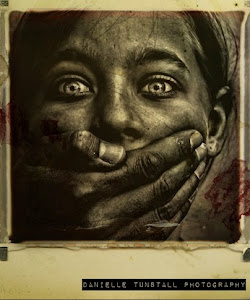
POETRY: Substance

Like the wind
I’m only visible
in what I’ve plucked from life.
Thoughts that swirl like green leaves
in a summer storm,
winged seeds from mighty maples
flitter down
to catch a grain of earth
and there to sprout

Ah, but you’ll see
the towering treetops bend to will,
and know,that is me too.

Posted in POETRY | Comments Off on POETRY: Substance

WRITING & STORIES: Readerly

He saw the heat and caught the scent
of yellow on his tongue,
tasting movement of its arc and hearing
daylight, loud as silence. 
Searching, reached out and felt
the shining disc
that burned his sight,
bit down and broke it with his teeth. 
So learned of darkness
of the morning
and the blinding touch of night.

Posted in STORIES, WRITING | Comments Off on WRITING & STORIES: Readerly

POETRY: Life Act I

Man strains, pulls, cries out
against the shackles of his chains,
His sound drowned by laughing thunder of the gods
who know but wouldn’t tell,
like time that can’t be seen,
a play rolls out in stages–
merely entertainment–
what right has he to rise above a whisper?

Posted in POETRY | Comments Off on POETRY: Life Act I

POETRY: Mass

What I think is not in sync with how
the world is turning.
Like an incohesive puff of cloud
caught in wild rotation
at the wrong pole of the globe.
Jostled by the thunderstorm
of life building in a path,
pulled along by inches facing backwards,
reaching out with fingers
streaming wisps of present into past,
circles undoing into spirals
that tangle, unravel, drift
away and out of sight.

Clock ticking counterclockwise
against the race of time,
day and night a struggle
needing to break free but
weaker, weaker as the storm
wears me to nothing,
less than a moment passing by.

Posted in POETRY | Comments Off on POETRY: Mass

WRITING: What’s Not Said Nor Read

There are days when what I’m thinking can’t be written, more often than the days when what is written must be thought out first.

Prose runs and jumps, words forming chains like children holding hands and laughing.  Playfully a few, a phrase formed by collusion, will tug another way to fool the line into confusion.  A bit of time is spent in the regrouping of the scattered images that fell and up again, will clamber for control of the direction, will often split and run to north and south and to the river or the mountains; whichever way to follow mother’s call back home.

The writer, wringing helpless hands above the keyboard, lets them go.

Posted in WRITING | Comments Off on WRITING: What’s Not Said Nor Read

LITERATURE: Ivan Denisovich – Metaphor & Symbolism

Like I’ve said, rarely do I read the intro and foreword to a book until I’ve completed the reading, not wanting to be influenced by the kind accolades or author input that can seriously change a reader’s experience.  But with this, knowing that it was based upon historical fact in Russia’s violent past, I felt it necessary to know a bit of the background of Solzhenitsyn’s story.

In this case then, it was important to know not only the time and place of reality in which the novel is set, but the after-events that may have affected the writer’s choice of language and how much would be told.  Russian government, even under the reign of Khrushchev who felt his people should know their history, was not truly ready for the truth.

And so I think of Voltaire’s Candide, and the truth hidden within a fantastical story that those in the know would find, and yet Voltaire could still feel some safety in getting the work eventually published. 

Shukhov (Ivan Denisovich) is feeling ill at the beginning of the book and his intention of reporting sick is thwarted by the wrong guard on duty that day who sends him to work.  Afterwards, and after a meal saved for him by his friends, Shukhov reports to the infirmary:

"But after all, Kolya…You see, when I should have come…last night…it didn’t ache."

"And now it does?  And what is it?

"Well, if you stop to think of it, nothing aches.  But I feel ill all over."  (p. 32)

Solzhenitsyn’s Shukhov is a representative figure of all those who suffered injustice and were sent to the camp–although his life there may have differed in attitude from some of the others.  But it would be reasonable to assume that the ache that doesn’t ache, the illness that overwhelms the body, is more than just a physical case of the flu. Perhaps it is Russia herself.

Posted in LITERATURE | Tagged | Comments Off on LITERATURE: Ivan Denisovich – Metaphor & Symbolism

WRITING & REALITY?: Truth is Stranger

I couldn’t write a believable story on what goes on every day in a world of normal people.  People who are loved and trusted, people who were raised right, people who will surprise you, turn away when in a certain light you catch the gleam that shouldn’t be there if all is honest.

Yet in hope and fairness, you’d rather tell yourself that you were wrong; it wasn’t there.

Posted in REALITY, WRITING | Comments Off on WRITING & REALITY?: Truth is Stranger

LITERATURE: Ivan Denisovich – Character

Solzhenitsyn endows his protatgonist, Denisovich, with the instincts of everyman, pits this reality against the unreality of life in a Russian prison camp.

Shukhov knew how to manage anything.

Work was like a stick.  It had two ends.  When you worked for the knowing, you gave them quality; when you worked for a fool you simply gave him eyewash.

(…) Shukhov wiped the floorboards with a damp rag so that no dry patches remained, tossed the rag behind the stove without wringing it out, pulled on his valenki near the door, threw out the rest of the water onto the path used by the camp authorities, and, taking short cuts, made a dash past the bathhouse and the dark, cold club to the mess hall.  (p. 26)

Human nature; the secret delight taken in getting away with something, with knowing how to fool somebody who himself is a fool–but has the upper hand.  This is how we get by sometimes, calling upon a passive aggressiveness where boldness would be dangerous.  Throwing the water–the dirty water–on the path, hoping perhaps that an officer will slip and fall on the resulting frozen slickness?

The human spirit can take a beating, but there is always that flicker left to flame up for a brief moment of glory and power, and hope.

Posted in LITERATURE | Tagged | Comments Off on LITERATURE: Ivan Denisovich – Character

LITERATURE: Glimmertrain No. 52 – Another Goodie

Rafael’s father started to die in March.  By summer, it was nearly complete.  (p. 99)

That’s the opening of Daniel Alarcon’s A Strong Dead Man, and the story that follows is very simple–a boy’s (Rafael’s) father is dying and his relatives gather to support them emotionally.  But it is the language:

Mario had bought them both sodas and the games slid by as they sipped from straws, their plastic bottles pimpled with condensation.

as well as pace and tone that make this story outstanding.  The conflict is there, in Rafael’s reluctant acceptance of the likely death of his father, and it is tied in in his mind with a previous experience of seeing a dead body, and reaffirmed by his older cousin Mario’s story of literally being hit by one falling out of a window.  Mario is the only one who is willing to listen to a young boy’s feelings while the elders are trying to shield him, as if he wouldn’t realize what is going on around him.  The final lines:

He thought of bodies falling from the skies.  He wished he had been there to see the body fall.  He wished he could have been there to catch him.  To hold him up.  To look him in the face and say, "Live!  Live!  Live!"

There is something else going on here too, and this is what makes the story so powerful, Rafael’s understanding and acceptance of the helplessness in the face of death.  He doesn’t wish as a boy, but as each and every one of us, regardless of age.  Nice story, great telling of it.

Posted in LITERATURE | Tagged | Comments Off on LITERATURE: Glimmertrain No. 52 – Another Goodie

REALITY?: Feelin’ Gooood

Cut my hair, tanned my arms and legs (I get a farmer’s tan that looks kinda weird unclothed), paid some bills, picked some vegies, and prepared papers for an early morning meeting tomorrow with the appraiser.

And, I lost those mysterious five pounds that showed up on the scale last week. 

My weight has always been stabilized into plateaus over the years.  90 lbs. from high school through mid twenties; 95 through early thirties and hitting 97 for the next decade, then 100 since.  The 105 that shocked me seemed to appear out of nowhere–though I don’t regularly weigh myself; maybe once a month or so when I notice the scale.  My eating habits are irregular at best, and even that never seemed to make any difference (even Edy’s Cappucino Chocolate Chip for breakfast).  Fluctuations were never noted and though any weight put on shows only in my waistline, didn’t notice a big change there either.  But since I noticed the scale at 100 over the weekend, it appears that the extra five pounds decided not to stay put.

So, back to my trim, lithe self, with an inch less hair and deeper complexion, I feel invincible again.

Posted in REALITY | Comments Off on REALITY?: Feelin’ Gooood

REALITY?: Morning Rain

Love this style of raining; heard but barely seen.  Fine drops in great profusion work together to form a noisy veil like tulle that grays the scene and takes it over for its mood.

Lettuce plants are smiling; I just know it. 

Posted in REALITY | Comments Off on REALITY?: Morning Rain

LITERATURE: Ivan Denisovich – Pace

Within a very few pages, we are involved in the mind of Ivan Denisovich in the apathy he has towards his situation, and yet he still reveals the instincts to survive by learning about the guards and fellow prisoners and the internal routines of the camp. We feel the cold of the Russian winter through the frost on the windows, the temperature gauge that the prisoners don’t trust to be true, and the decision Ivan makes about what will be his only pair of boots.

So much said in so little space.

Posted in LITERATURE | Tagged | 2 Comments

LITERATURE: Ivan Denisovich – Metaphor

This is the first time I actually read the introduction to a book, possibly because I felt–and was right–that the backstory and setting that held the needed information would be here, rather than interwoven in the narrative.  Doing so immediately made me aware of a metaphorical passage in the beginning of the novel that related to the larger story behind it.

Shukhov decided to report sick.

At that very moment his blanket and jacket were imperiously jerked off him.  He flung his coat away from hs face and sat up.  Looking up at him, the head level with the top bunk, was the lean figure of The Tartar.

"S 854,"  The Tartar read from the white strip tht had ben stitched to the back of his black jacket.  "Three days’ penalty with work."  (p. 21)

The author, Alexander Solzhenitsyn, wrote this first novel many years after his 8-year incarceration in a labor camp for an anti-Stalin remark he may have made.  This, after having proudly served in the Russian army during WWII.  In the novel, the protagonist, Ivan Denisovich is in such a camp, and as the story opens, he, who has always risen immediately at reveille to take advantage of the 90 minutes of "free" time before the workday begins, remains in bed because he is tired and achy this single morning. 

The clever way that Solzhenitsyn opens the book with an unjustified punishment for an imagined infraction sets the tone for what is to come.

Posted in LITERATURE | Tagged | Comments Off on LITERATURE: Ivan Denisovich – Metaphor

LITERATURE: Glimmertrain No. 52 – A Winner

Finished Confrontations (a very good issue that was, too) and moved onto this Glimmertrain.  I’m a third of the way through and have come upon a real winner–of the Very Short Fiction Award.  Now I’m usually woefully lost as to why some of these become the creme de la creme, but on this one, I have nothing but admiration for this writer.

The name of the story is A History of Everything, Including You and it’s by Jenny Kennedy and despite her MFA in CW, this is her first published story.  I’m sure it will not be her last.  It is written in first person pov, and it starts out like this:

First there was God or gods or nothing, then synthesis, space, the expanse, explosions, implosions, particles, objects, combustion, and fusion.  Out of the chaos came order.  Stars were born and shone and died.  Planets rolled across their galaxies on invisible ellipses and the elements combined and became.  (p. 73)

In the next two paragraphs the narrative brings the world up to include man’s evolution:

We fell in love.  We talked about God and banged stones together, made sparks and called them fire.  We got warmer and the food got better.

And onward:

We got married.  We had some children.  They cried and crawled and grew.  (…) We got sick and searched for cures.  We invented lipstick, vaccines, (etc.)

And in a brilliant move, it becomes personal:

You were born.  You learned to walk and went to school and played sports and lost your virginity and got into a decent college (etc.)

Then the relationship between the "you" and the narrator becomes established, and we fly through a marriage of ups and downs in the next page.  And then, the death of the partner.

It’s a beautifully drawn image, concise, relative, and loaded with emotional depth even in its brevity.

I wish Jenny Kennedy a very successful writing career–she’s obviously got what it takes.

Posted in LITERATURE | Tagged | Comments Off on LITERATURE: Glimmertrain No. 52 – A Winner

REALITY?: Changes

Changes in weather with its autumn sounds and scents and feelings.  In life, wandering amid the well–familiar and missing what is gone.  In writing, ever constant ever different ever striving, opening up the soul to what is buried and what is born.

Posted in REALITY | Comments Off on REALITY?: Changes